“What place is so proper as the assembly-room to see the fashions and manners of the times, to study men and characters…” Thomas Wilson, Dancing Master, An analysis of Country Dancing, 1811, pg. 6 of The Dancing Master.
Vanessa here,
It was late. The lights had dulled. I turned to leave, and there across the crowded bookstore, I saw it. A book like no other.
Timed to the subtle Barnes & Noble background minuet, I stepped near and ran a finger along it’s fine spine. It whispered a blurb just for me.
Finding himself the man of the family, London dancing master Alec Valcourt moves his mother and sister to remote Devonshire, hoping to start over. But he is stunned to learn the village matriarch has prohibited all dancing, for reasons buried deep in her past.
Alec finds an unlikely ally in the matriarch’s daughter. Though he’s initially wary of Julia Midwinter’s reckless flirtation, he comes to realize her bold exterior disguises a vulnerable soul—and hidden sorrows of her own.
Julia is quickly attracted to the handsome dancing master—a man her mother would never approve of—but she cannot imagine why Mr. Valcourt would leave London, or why he evades questions about his past. With Alec’s help, can Julia uncover old secrets and restore life to her somber village . . . and to her mother’s tattered heart?
Filled with mystery and romance, The Dancing Master brings to life the intriguing profession of those who taught essential social graces for ladies and gentlemen hoping to make a “good match” in Regency England.
The Dancing Master by Julie Klassen
It had me at Finding. With The Dancing Master tucked firmly in my grasp, I gave the attendant my coins and fled to a carriage, content in the knowledge I’d found a joy to keep me warm through the frigid Atlanta night.
Vanessa: Today at R&R we have Julie Klassen joining us. Julie, it is my pleasure to welcome you back to Regency Reflections. The Dancing Master ‘s premise really intrigues me. Normally, we see Regency books with the hero as a duke, a barrister, a spy, or maybe a doctor, but a dancing master, not so much. How did you come up with this idea?
Julie: In Regency England, dancing was one of a limited number of ways young men and women could spend time together or court one another. It was considered such an important social skill that parents hired dancing masters to come into the homes and teach their sons and daughters to dance. “Every savage can dance,” Mr. Darcy says, but unless one wished to dance very ill (Mr. Collins comes to mind) lessons were crucial. So, as an author of half a dozen other books set in the Regency era—and someone who loves to dance–it was probably only a matter of time until I wrote about a dancing master. As I say in my author’s note, I learned to dance the box step standing atop my dad’s size 15 triple E shoes. Later, I went on to take every ballroom dance class I could sign up for at the University of Illinois. I even taught a few dance classes of my own through community ed. I enjoyed drawing on all of these experiences to write this book. Like ballroom dancing, I find English country dancing exhilarating, joyful, and just plain fun. I hope to express that joy in the novel.
Vanessa: Wow, Dad has some big shoes to fill. Poor Mr. Klassen, has his work cut out for him, between dad and all of your romantic heroes. Tell me about what kind of research you conducted. Hopefully plenty of dancing.
Julie: I read instructional guides and journals written by dancing masters of ages past, and watched reenactors perform English country dances online. But the best and most enjoyable kind of research was actually learning dances from that period. My dear, long-suffering husband and I went English country dancing several times.
Julie Klassen at the Ball
I also attended the annual general meeting of the Jane Austen Society of North America, held in Minneapolis in 2013. There, I took two more dancing classes to polish my skills before the “Netherfield ball,” complete with live musicians and costumes. It was a wonderful experience to dance with fellow Austen fans from around the world.
During the conference, we also watched a BBC production: “Pride And Prejudice: Having A Ball.” In this program, a team of experts recreated a private Regency ball, complete with historical food, costumes, music, and dances. Unlike most of the sedate dances we see performed in period movies nowadays, in reality many of the dances of the era were fast paced and lively. Those of us watching were surprised how energetic the dances were, and how the performers (trained dancers in their twenties) were breathing hard and perspiring after a few dances.
By viewing the program and taking the dance classes, I gleaned several details to include in The Dancing Master. For example, when a couple reaches the top or bottom of a long-ways set (line of dancers) they stand out for a round before working their way back up or down the line. This gives couples a breather, and more importantly, a chance to talk and flirt with their partners!
If you’d like to learn more about the JASNA conference, here’s a fun video my publisher took of me (in costume) at the event. http://www.youtube.com/watch?v=y5KmFKlJlfk
Vanessa: Ok, enough of the pleasantries. Julie, tell me about dreamy Alec Valcourt.
Julie: Alec is capable, loyal, and determined to support his mother and sister. He is a sharp dresser, prefers to keep his hands clean, and wields a fencing sword far better than an axe or spade in a rural village where most men are farmers or miners. As you can imagine, this leads to several painful scrapes along the way.
Vanessa: Why is Julia Midwinter the perfect foil to Alec?
Julie: Julia is a bit reckless, flirtatious, and difficult. But like many people in real life, there is more going on beneath the surface—and in her past—that has made her who she is. As the story unfolds and secrets are revealed, Alec begins to see the vulnerable, wounded soul beneath the brash exterior. He learns to understand her and becomes fond of her, especially as she begins to grow and change, and I hope readers will follow his lead.
Vanessa: Growing and changing. Sigh. I know I’ve made a few mistakes on that road. What spiritual truth would have made a difference to Julia, if she had realized it at the beginning?
Julie: All her life, she had been seeking a father’s love and approval. And if she could not have a father’s love, then any man’s approval would do. She had strived so long and so hard to gain attention in the wrong ways and from the wrong people…. If Julia had realized earlier that even though her earthy father failed her, her heavenly father loved her and highly valued her–she might have avoided some of the foolish things she did to try to fill the void left by the absence of a father’s love.
Vanessa: After reading Julia’s and Alec’s story, what else do have for us. There will be more cold nights in Atlanta.
Julie: I am currently working on rewrites for my next Regency-era novel with Bethany House Publishers. It’s a mysterious romance called The Secret of Pembrooke Park, and is due to be released December 2014.
Vanessa: Julie, The Dancing Master, is an amazing book. Asking this of any author is unfair, but if you could sum up the spiritual journey in one word what would it be?
Julie: Grace. I enjoyed weaving in grace in its many forms–social graces, grace in dancing, and most importantly, God’s grace—and I hope readers will be reminded of His amazing grace for us all.
Vanessa: Thank you for being a great sport and sharing this special book with us.
Julie: Thank you for having me here!
Julie Klassen is going to give away a paperback or e-book copy of The Dancing Master to one lucky commenter. Share with us your favorite dance, dance scene, or dance disaster. Mine took place at last year’s RWA conference when I tried to do a reel. There’s video….
Any way, here’s an excerpt from The Dancing Master:
“May I help you with something, Miss Midwinter?” Alec said officiously, hoping to chase the self-satisfied grin from her face.
“Yes, actually.” She clasped her hands. “I’ve come for a dancing lesson. Here—since Lady Amelia would never allow it in the house.”
He licked dry lips and felt his pulse rate quicken. Part of him relished the notion of being alone with Miss Midwinter. Enjoying her company and her undivided attention. Taking her hand in his to lead her through a private dance in a deserted churchyard . . . His chest tightened at the thought.
But he knew all too well the possible consequences of such stolen moments. Such seemingly innocent beginnings.
She took a step forward, and he stepped back. She performing the chassé, and he performing the dance of retreat.
He said, “Miss Midwinter. Before we proceed any further, I must tell you that I have a strict policy against any romantic involvement with my pupils.”
She blinked, momentarily taken aback. “In that case, perhaps I ought to reconsider becoming a pupil of yours.”
JULIE KLASSEN loves all things Jane—Jane Eyre and Jane Austen. A graduate of the University of Illinois, Julie worked in publishing for sixteen years and now writes full time. Three of her books have won the Christy Award for Historical Romance. She has also won Christian Retailing’s BEST Award and has been a finalist in the Romance Writers of America’s RITA Awards. Julie and her husband have two sons and live in St. Paul, Minnesota.
Parasols were introduced to England from China. The earliest ones were silk and often shaped like a pagoda.
pagoda parasol
This elegant accessory was mainly to shade a lady’s delicate, fair complexion. Jaunts through warehouses for accessories would have included buying parasols to match particular outfits.
matchy matchy
The frames were bamboo, cane, or steel. Funny for us 20th-21st century ladies to realize that suntans were extremely unfashionable until the 1920s, when Coco Chanel helped to popularize the suntan. Prior to that, only women who had to labor outdoors were tan. After the 20s, chic, wealthy women were outdoors because they alone had the leisure time for outdoor games like tennis and golf.
Regency Reflections is entering it’s third year! To celebrate, we’re giving you a gift. Each month you’ll get a brand new short story from one of our authors. It’s going to be a great year. Thanks for helping us be the home of inspirational Regency readers.
Saving Miss Caulfield, Part 1
If Miss Bianca Caulfield laughed at one more thing her idiot of a dancing partner said, Landon Sinclair was going to break something. Preferably Mr. Camden Theodore’s toes. Then the cad wouldn’t be able to whisk her away from the protection of her mother and brother under the guise of an innocent quadrille in a London ballroom. What were they thinking, letting him court Bianca?
He supposed he should call her Miss Caulfield now, but she had always been Bianca to him.
She was easy to spot in the crush of dancers, her blonde hair twisted into the simplest coiffure in the room. Landon caught glimpses of her light green dress as she moved between the other dancers. She was light on her feet, floating through the complicated dance steps without any effort. It was a hard-won grace, Landon knew. He’d spent hours this winter having his feet trampled and his shins kicked as she tried to learn the steps. Her brother sported similar injuries, but one would never know it to see her now.
It would have been a pleasure to watch if she weren’t smiling up at Mr. Theodore.
“Please tell me you intend to start a mill with that fist, Lord Braidstone. This evening could use a good distraction.”
Landon looked down at his hand, surprised to find it curled into a tight ball. With conscious effort he loosened his fingers, stretching them until the knuckles popped. A deep, fortifying breath brought the strong combination of perfume, smoke, and champagne, further reminding him of the conduct expected of a viscount at a social gathering.
He glanced at the speaker, finding the expected grin on his friend’s face. “You let her dance with that shuffler, Caulfield?”
Mr. Giles Caulfield, Bianca’s brother, shrugged and adjusted his coat sleeve. “Why not? He’s well off, popular, and set to inherit a barony.”
“He’s a pompous windbag who lies his way through what should be gentlemen’s dealings and falls asleep in church.” Landon made a point of leaning casually against the wall, crossing his arms to hide any fist-making tendencies he might unconsciously entertain.
Giles adjusted his sleeve again. “Pompous or not, his attention has chased off all other interested beau.” He cleared his throat and tugged at the other sleeve. Obviously the man needed a new tailor. Or perhaps his valet had ruined the coat somehow. “Unless you know of someone?”
Landon cast his eyes about the ballroom. There had to be someone better than Theodore. Anyone was better than Theodore. He would trample on Bianca’s open heart and sweet spirit, breaking the girl Landon had watched grow up. The mere thought of losing the light of her smile made Landon desperate.
“What about Mr. Bertram?” Landon nodded towards the mill owner across the room. A bit old, perhaps, but he was honorable and loyal and able to provide a good life for Bianca.
Giles shook his head. “Too busy with rebuilding after the Luddites smashed his looms. He’s only in Town to visit Parliament.”
True enough. Rumor was he’d let his house fall into disrepair as he tried to save his business. Bianca shouldn’t live in a rundown house. Landon blew his breath out through pursed lips as he looked over the room. That one’s reputation was awful. Another given to drunken routs.
His eyes lit on a tall gentleman entering the ballroom. “Fellbourne?”
Giles shook his head. “Has plans to ask for Presbrook’s daughter.”
The girl who’s dinner conversation was limited to the fit of her slippers? Fellbourne never had possessed high enough standards to appreciate Bianca. “Milton?”
“Debt. He’ll probably be run out of Town within the month.”
Landon jerked his gaze back to Giles. “Truly? I had no idea.”
Giles nodded. “I overheard several shopkeepers today while I was waiting for Bianca outside the milliner.”
“That won’t run him out of town unless he runs up an account at one of the finer establishments. Still, it’s a vise Bianca need not deal with.” Landon returned to scrutinizing the options in front of him, looking for someone ideal and realistic.
“Miss Caulfield.”
What was Giles saying? Bianca was still dancing with that rascal. “Beg your pardon?”
“Bianca. You should call her Miss Caulfield now. At least in public.”
Landon grunted in agreement. For propriety’s sake he should use a more formal address, but there was a much more pressing issue at stake than adjusting his life-long habits.
The dance set was drawing to a close. Soon Bianca would be back at her mother’s side where someone more suitable could ask her to dance. Landon glanced to his left to see if Mrs. Caulfield was still in her previous location. One of Theodore’s friends hovered at her elbow.
“It appears that Theodore is determined that your sister not have any other options.” Landon nodded his head in Mrs. Caulfield’s direction.
Giles gave no more than a glance to the man waiting with his mother. “I believe I mentioned that.”
Landon waited, but it became painfully obvious that Giles was going to do nothing to stop Theodore and his cronies from monopolizing Bianca’s attention. With a sigh Landon made his way through the crowd at the side of the ballroom.
Giles was a dear friend, closer than any of Landon’s own brothers or cousins, but lately he’d been shirking in his brotherly duties towards his sister, leaving Landon to pick up the pieces. They were going to have to talk soon, but first Landon had to save Bianca.
###
Bianca’s face hurt. She’d only been at the ball for an hour and already she was faking the smiles and relying on well-practiced laughter to give the impression of a young woman having the time of her life. In reality she was desperate and growing moreso as the season continued. She couldn’t return home without a secure future.
In truth she couldn’t return home at all. Mother and Giles tried to assure her that Father wouldn’t mind, but they all knew the truth. He’d grumbled for months about the expense of a London season, the uselessness of daughters, and even the size of her dowry, although none of that came directly from him. God bless her grandfather who had left her a decent dowry when he died. Without it, who knows what her father would have set aside for her?
Mr. Camden Theodore was saying something about country estates and the seclusion from Town, but Bianca could barely make out the words over the pounding of her heart and the constant litany of dance steps running through her mind.
They couldn’t afford much time with a dance master, so Bianca had been left to practice with her brother and their generous neighbor, Lord Braidstone. Landon. Bianca swallowed a sigh as she kicked her skirt clear of the next intricate step. She strained her ears to hear the music over the loud talking around her and the fears screaming in her mind.
She brought her thoughts back to Landon. He always had a calming effect on her. Such a mixed blessing. He’d been part of every significant moment in her life, another older brother ready to tease her one moment and rescue her the next.
But he’d ruined any chance she had for marital bliss.
The dance ended and Bianca dropped into a curtsy, looking up at Mr. Theodore through her lashes. She tried to picture him as her husband, but the effort was futile. She couldn’t imagine a cozy dinner at home with his flat eyes across the table or a quiet stroll through the countryside with his constant stream of boasts and gossip as the only conversation.
That may be her life, though.
“Don’t you agree?” he asked with a pat of her hand as he led her from the dance floor.
Bianca smiled. Was the panic reaching her eyes? Because she had no idea what to say and couldn’t blindly agree to a question, not when it was entirely possible he’d asked something crucial to her future happiness. The man spoke often of expediency and efficiency. He might have asked her to marry him on the dance floor to save him a trip to her house.
How to get out of this? “I am parched. Do you think they have lemonade?”
His face screwed up in a frown, the only expression that ever reached his eyes. “Of course. You had a glass before we danced. We missed the first song if you’ll remember.”
A delaying tactic that had caused her to spend more time in his company instead of less. “I had forgotten. It must be the heat. Quite a crush tonight, is it not?”
They reached her mother and Bianca gracefully slid her hand from his elbow, restraining the urge to wipe her glove on her gown. She didn’t want to mar the precious light green silk. It was the only evening gown of color that Mother had allowed.
“I am sure that Mr. Julian can see to –“ His frown darkened. “What are you doing here?”
Bianca spun her head so fast her neck twinged in protest. Mr. Theodore had obviously been expecting his friend, Mr. Julian, to be waiting to claim her for the next dance. Joy, relief, trepidation, and speculation warred for prominence in Bianca’s midsection as she took in the welcome sight of Landon’s tall form standing beside her beaming mother.
Landon raised his brows and looked around as if wondering what wasn’t painfully obvious about his intentions. His brown eyes smiled at her as he brought his gaze back to her. “I’m here to claim Miss Caulfield for the next set.”
“But Julian –“ Mr. Theodore stumbled to a halt.
Mother waved her hand in the air. “Mr. Julian was here, but I sent him to fetch me a glass of lemonade. It is so dreadfully warm in this crush, isn’t it?”
Bianca tried to contain her giggle, but it escaped in an inelegant sputter through her lips. She coughed to hide the embarrassing sound, but ended up sounding like a sick cow as the cough and giggle mingled in her throat.
Landon grinned. “Are you well?”
“Yes, quite.” Bianca forced her lips to curve. Hopefully it looked like a smile. Ice. Brisk breezes. Swimming in the lake at the first sign of Spring. She willed the chilly thoughts to keep the heat of a blush away. Her neck grew warm, but her cheeks remained mercifully cool.
“Shall we?” Landon offered his arm.
Bianca pinched herself as she placed her hand on his elbow. She’d danced countless times with him at home, but never had he asked her at an actual event. He claimed she should keep her dances free for the men vying for her hand and attentions.
Oh how it hurt that he didn’t number himself among those men.
The music started and they bowed to each other. It was a simple dance, one she’d done since she was a girl, which allowed her to focus on her partner. Her handsome, kind, intelligent partner.
He leaned his head down as they stepped between the other couples. “I’ve heard the singer at Vauxhall is quite good.”
Bianca felt a blush threaten her ears. What would he do if she ran her fingers through his dark hair? “I haven’t had the pleasure of hearing her yet.”
“Perhaps we should go then.”
They circled around the other couples in their group until they made it to the end of the line, where they stood facing each other. Bianca was floating. Did he actually want to escort her to Vauxhall? Was he finally seeing her as something other than a younger sister? Her prayers must be working.
Landon smiled across the way at her. “What do you think? Shall we make a party? I’m sure your brother would like to go. Is there someone special you would like me to invite?”
Bianca blanched. He couldn’t mean what she thought he meant. “Special?”
“Yes.” He stepped forward and grasped her hand as they reentered the dance. “Please, anyone but Mr. Theodore. I can’t abide the fellow.”
Bianca tripped over a simple step and stumbled into Landon’s side.
“Oh!” she cried as she righted herself, only to find herself adjusting too much and crashing into the woman on her right.
Landon gripped her arm and righted her with a small laugh. “We’ll simply focus on the dancing for now, hmm? Just like old times.”
“Just like old times,” she said with another cheek torturing smile.
He gave her a brilliant smile as the dance concluded, congratulating her as he always did. And Bianca’s heart broke.
The next morning Bianca doodled nonsense on a piece of writing paper, staring out the drawing room window. The Season was nearly half over. Announcements appeared almost daily in the Times. Mother tried not to look worried, but occasionally Bianca found the paper with a name or two circled and she knew another man her mother had hoped to match her with had found someone else.
She was starting to get desperate. Was she to be forced to settle for the first available option? In truth it appeared she was only to have one option. And did it really matter? The man she loved didn’t love her and didn’t see her as marriage material. Only time, God’s grace, and determination were going to make her love her husband. Even then she doubted it would be a passionate love like the couple in Song of Solomon.
At least half of what she’d read in that book of the Bible was beyond her understanding, but it had sounded wildly thrilling and made her think constantly of Landon.
“Lord Braidstone to see you, miss.”
Bianca’s gaze flew to the maid. Landon never called for her.
And then he was there, his large frame filling the doorway, his brown eyes twinkling and a small smile on his lips. His chestnut hair curled where his hat had been and her fingers itched to smooth it down.
“Good morning.” He entered the room and sat in the chair beside her writing desk.
“What are you doing here?” The abruptness of her question made Bianca wince.
“I came to finish our conversation. Giles said you have no fixed engagements for this evening so it seemed a fine time to go to Vauxhall.”
Oh yes, the trip to the Gardens. His curiosity about whether or not she had someone special to invite. “Yes. That would be a fine idea.”
“Have you thought of anyone we should include in the party?” He settled further back in his chair. “Anyone but Mr. Theodore.”
What was wrong with Mr. Theodore? Other than his obvious similarity to all of the other unappealing obsessively ambitious young men she’d met in London. “I’m afraid he’s the only one.”
He surged from the chair and began to pace. “You cannot seriously be contemplating marriage to that man. He’s cruel. I’ve seen it with my own eyes. He cares nothing for his horses, works his staff to the bone, and neglects any and all things Godly. More often than not he leaves the club foxed. You cannot marry him.”
Bianca stood with a frown, resignation pooling in her heart. “Which makes him very similar to half the other men I’ve met in London. He hasn’t asked yet, but he is the only one who potentially will. I hope he does. I don’t have any other choice.”
“You could go home.”
Bianca smiled sadly into Landon’s eyes. The hesitant way he’d said the sentence proved he knew how harsh Father’s welcome would be if she returned home unwed. He’d declare her a failure and doom her to a miserable secluded spinsterhood.
“Well, there must be someone.”
Her hand looked small as she reached out to touch his arm and stop his pacing. Her broken heart reached out to him. A pseudo-brother with no acceptable means of aiding her. It must be a difficult position for him. “There’s no one else. If Mr. Theodore asks, I will have to consent. He has an estate in the country. I believe he would be content to leave it for me to run in his absence. With the title, he’ll require children. I would be happy to have children.”
Landon’s frowned darkened. He wrapped his hands around her upper arms and looked deep into her eyes. “You can’t marry him.”
He crossed to the window, muttering quietly to himself. Was he naming and excusing other men? She didn’t even recognize some of the names. Shame coursed through Bianca until it weakened her legs and she fell back into her seat. Even Landon, with all of his connections and social status couldn’t think of a decent man who would be interested in marrying her.
“I have no other options.” Bianca smiled at him as best she could, but she’d never been able to hide from Landon. He would see her sadness, feel her resignation, and there was nothing she could do about it.
“Yes you do.” He spun from the window, his mouth pressed into a line of resolve. “You can marry me.”
We’re honored to have a special guest with us today, Regency author Jennifer Hudson Taylor. Jennifer will be giving away one free kindle version of her newest novel, Awakened Redemption to a commenter, so be sure to say hi in the comment section below.
1. Jennifer, what drew you to write during the Regency Time Period?
I have never seen a movie or read a book in this time period that I didn’t enjoy. I wish there were more stories in this era and decided I would write one.
2. Tell us what year your book is set in and why you chose that particular time.
1815. It had to be after the war since my hero was returning from the war at the beginning of the story. His history in the war provides the back story needed to set stage in Awakened Redemption.
3. What’s your favorite, unique Regency aspect of the novel, something you wouldn’t be able to include in a novel set in another place or time?
The clothing and fashion of the time period
4. Historical clothing is always fun, isn’t it? What are the biggest challenges to writing in the Regency Period?
Getting all the titles and rules correct
5. I’m laughing at that because there are certainly a lot of both titles and rules! Who is your favorite Regency Author?
It would be too difficult for me to choose just one
6. What is your favorite Regency food, aspect of dress, and/or expression?
Stuff and nonsense
7. What is your favorite Regency setting; e.g., London, country house, small village?
This is hard since I prefer a variety of settings. In Awakened Redemption, the story is set in Cambridge and they live in a country cottage, but the setting changes to London.
8. What makes your hero and heroine uniquely Regency?
The way they talk, dress and act. I don’t think it is any one unique thing about them, but everything about them.
Thanks so much for being on Regency Reflections, Jennifer! I wish you well with the release of Awakened Redemption. It sounds like a fun story, but then, who could complain when you’ve got murder and betrayal twined into a Regency novel? To enter the giveaway, be sure to leave a comment below. Contest will end at midnight on Saturday, Feb 1.
Awakened Redemption Preston Mallory hires Elyse Brigham as a nursemaid for his son. Recovering from an abused past, she begins to open her heart to him until she discovers Preston’s true identity. Betrayed, she flees to London and Preston follows hoping to mend things. His plans are thwarted when his former fiancée is murdered. With plenty of motive and no alibi, he’s arrested. How will he prove his innocence and convince Elyse to forgive him? Elyse has nowhere to turn and believes the Almighty has forsaken her. As her life unravels, a new foundation and path are laid before her if she has the courage to forgive and cling to a forgotten faith.
Jennifer Hudson Taylor is an award winning author of inspirational fiction set in historic Europe and the Carolinas. She gives presentations on the publishing industry, the craft of writing, building an author platform and digital marketing. Her first six novels were contracted through Abingdon Press and her other published by Barbour Books, Guideposts, Heritage Quest Magazine, RT Book Reviews and USAir Magazine. Jennifer graduated from Elon University with a B.A. in Communications. She enjoys spending time with her family, traveling, and visiting historical sites.
When we asked the Regency Reflections authors what the best book of the year was, we got several interpretations:
* What is the best book you’ve read thus far in 2014?
* What was the best book of 2013?
* What is your most anticipated book of 2014?
Any way you interpret it, it’s an intriguing question. Our answers are below but we’d love to hear from you in the comments. What do you think is the best book of the year?
Ruth Axtell – In fiction I’ve been very impressed with A Cast of Stones, Book 1 in the new Staff and the Sword Christian fantasy trilogy by debut author Patrick W. Carr
Naomi Rawlings – A Bride for Keeps by Melissa Jagears
Laurie Alice Eakes – Right now, the only amazing book I’ve read so far and will be reading through this year is the Bible. It’s been a few years since I’ve read through it in a disciplined plan, and am amazed all over again at how amazing is the word of God. Holding fiction reading opinions in reserve as of yet.
Kristi Ann Hunter – Dear Mr. Knightley by Katherine Reay. Such a fun read and a great look at the difference between books as a passion and books as an obsession. If you love the classic Austen and Bronte books, you’ll enjoy all the references in Dear Mr. Knightley. I’m pretty sure this is her first book, so I’m very excited to see what else she does.
Kristy Cambron – I am in the middle of Sarah Ladd’s new release — The Headmistress of Rosemere. As with her debut, fans of Austen will love book two in the Whispers on the Moors series. I’m planning on getting little sleep until I make it to the back cover! 🙂
Susan Karsten – Ah, what fun! To think over all the wonderful books I read last year and pick the most amazing. I am going to pick a CBA* book, To Die For, A Novel of Anne Boleyn by Sandra Byrd, as the most amazing Christian historical fiction book of 2013. Honorable mention goes to an excellent laugh-out-loud ABA* book, Where’d You Go, Bernadette by Maria Semple.
Your turn! Head down to the comments and tell us your favorite book of 2013 or thus far in 2014 or even the book you can’t wait for that’s coming out sometime this year.
*Note: CBA stands for Christian Booksellers Association and ABA is for the American Booksellers Association. In writing circles ABA is sometimes referred to as “general market.”
I was recently emptying out and cleaning a bookshelf, one that held my non-fiction. I realized that most of my reference books are books I’ve acquired over the years (decades) to aid me in researching whichever story I happen to be working on at the time. They are grouped by subject, so they are like a roadmap of my writing career.
For example, along half a shelf were books on Sephardic judiasm, judiasm in the first centuries A.D., synagogues across Europe, the formation of the Methodist church, and portraits of the great 18th century revival. These books cover the period when I researched and wrote my first-ever regency historical, Winter Is Past, a love story between a Sephardic Jew in London and a Methodist nurse. Talk about star-crossed lovers.
Another shelf has books on the history of the American sailing ship, piloting, seamanship, and small boat handling, for a historical romance I did about a wooden boatbuilder (Lilac Spring).
Getting back to regencies, here are some of my favorite reference books, which I collected in those years preceding Google: Quacks, Fakes and Charlatans in Medicine (used primarily in researching The Healing Season, a story about a surgeon in regency times); Moers’ The Dandy (great resource for information on Beau Brummell and all those who aped him); Colley’s Britons, for a general history of the nation; and The War of Wars, a very thorough history of the Napoleonic wars. The Streets of London from the Great Fire to the Great Stink is a detailed description of street life in regency London (which I also needed in writing The Healing Season). The London Encyclopedia, which I was fortunate to get used, is a wonderful resource on just about any geographic building and landmark in London and its environs. I used a 16th century mansion, Osterley Park, within a short train ride from the center of London, for the country estate of one of my characters in The Rogue’s Redemption. I was able to tour the place in person, but if I hadn’t, there it is listed in The London Encyclopedia, complete with a print of it on page 568.
For a different kind of London residence, there’s a print and entry for the Millbank Penitentiary, built in 1821. It was pulled down in 1903, so you need a reference like The London Encyclopedia to pinpoint what buildings did and didn’t exist in London 200 years ago. I set my first regency in Belgravia, until a critique partner pointed out to me that this London neighborhood had not begun to be developed until AFTER the regency. Oops! Thank goodness for sharp-eyed and knowledgeable critique partners.
John Russell’s London, is another fun, fact-filled history of London and its various neighborhoods over the centuries.
For regency fashion, I have Ackerman’s Costume Plates 1818-1828, which has detailed prints of late-regency gowns.
This is only a portion of my historical research books, which I don’t pull down from the shelves so much anymore. These days it’s easier to “google” an item in question. But having read these books cover-to-cover at one time or another certainly gave me a more in-depth knowledge of the 19th century than just googling disjointed pieces of information would have.
What are some of your favorite reference books for history?
Since this is January, I wanted to write something that happened in that month during the Regency. Although I know many things did, I ran across something I could not resist writing about, though it takes place twenty-two years earlier than the Regency that has given rise t so many novels and films.
In 1788, George III’s illness manifested itself so severely, many believed he would not recover. Pitt the Younger, prime minister at the time, considered a Regency for the simple fact that it was that or lose his power. Charles Fox, after all, was firmly in the Prince of Wales’ camp and had too great a shot to gain power and depose Pitt without a Regency bill.
Pitt the Younger Source: Wikipedia
Yes, politics has always been about power.
So, during January of 1789, Pitt set a Regency bill into motion and it was passed by the House of Commons. This bill kept the Prince of Wales under firm control of Parliament with such provisions as how the Prince must keep the King’s present government and he could not manage the king’s real or personal estate without Parliamentary approval. In short, Prinny would be nothing more than a figurehead monarch.
Precedent for the future?
The bill never reached the House of Lords, for the King
Mad King George III, Source Wikipedia
recovered by March, but the seeds were planted for the all-important Regency era that made it’s debut in 1811.
For a little extra, here is a poem about the almost Regency, written by Robert Burns, that great Scottish poet whose birthday is celebrated on January 24.
Ode to the departed Regency bill 1789
Daughter of Chaos’ doting years,
Nurse of ten thousand hopes and fears;
Whether thy airy, insubstantial shade
(The rights of sepulture now duly paid)
Spread abroad its hideous form
On the roaring Civil Storm,
Deafening din and warring rage
Factions wild with factions wage;
Or underground, deep-sunk, profound,
Among the demons of the earth,
With groans that make the mountains shake, Thou mourn thy ill-starr’d, blighted birth; Or in the uncreated Void, Where seeds of future-being fight, With lightened step thou wander wide, To greet thy Mother – Ancient Night, And as each jarring, monster mass is past, Fond recollect what once thou wast:
In manner due, beneath this sacred oak,
Hear, Spirit hear! thy presence I invoke!
By a Monarch’s heaven-struck fate!
By a disunited State!
By a generous Prince’s wrongs!
By a Senate’s strife of tongues!
By a Premier’s sullen pride,
Louring on the changing tide!
By dread Thurlow’s powers to awe,
Rhetoric, blasphemy and law!
By the turbulent ocean,
A Nation’s commotion!
By the harlot-caresses
Of borough addresses!
By days few and evil!
Thy portion, poor devil!
By Power, Wealth, Show! The gods by men adored!
By nameless Poverty! their hell abhorred!
By all they hope! By all they fear!
Hear!!! And appear!!!
Stare not on me, thou ghastly Power;
Nor grim with chained defiance lour:
No Babel-structure would I build
Where, Order exiled from his native sway, Confusion may the regent-sceptre wield, While all would rule and none obey:
Go, to the world of Man relate
The story of thy sad, eventful fate;
And call Presumptuous Hope to hear,
And bid him check his blind career;
And tell the sore-prest Sons of Care,
Never, never to despair.
Paint Charles’s speed on wings of fire,
The object of his fond desire,
Beyond his boldest hopes, at hand:
Paint all the triumph of the Portland Band:
Mark how they lift the joy-exulting voice; And how their numerous Creditors rejoice:
But just as hopes to warm enjoyment rise, Cry, Convalescence! and the vision flies.
Then next pourtray a darkening twilight gloom Eclipsing, sad, a gay, rejoicing morn, While proud Ambition to th’ untimely tomb By gnashing, grim, despairing fiends is borne:
Paint ruin, in the shape of high Dundas
Gaping with giddy terror o’er the brow;
In vain he struggles, the Fates behind him press, And clamorous hell yawns for her prey below:
How fallen That, whose pride late scaled the skies!
If you’re reading this blog, chances are you are a fan of the Regency fiction genre. You’re all about high-waisted dresses, chaperones, Almack’s, Gunther’s, house parties, and more.
But do you know why there ever was a Regency? It was madness! The madness of King George III. His health required the contingency plan of a prepared handing off of the reins of power – this plan laid out a form of emergency government/royal powers which was known as the regency. It’s a situational set-up for when a monarch is unable to fulfill his duties.
You can’t uncrown a living king, right? So, in their wisdom, the high advisors of the land made the Prince of Wales, eventually Goerge IV, the Prince Regent.
King George III (king during the American Revolution) had a disease now thought to be Porphyria. Porphyria is a rare blood disease and drove the king to complete madness and seclusion in 1810.
King George III (“Farmer George”)
For Americans, King George III is a vaguely hated figure, because of the Revolutionary War, but he doesn’t sound all bad. His nickname was “Farmer George” due to his keen interest in agriculture. Said to be a devout Christian, he was a dedicated, yet repressive parent (not enough grace?), a faithful husband, and a plain-living man. The information about his interests is fascinating, if you decide to learn more, and the manner in which his first born son rebelled is an instructive cautionary tale.
The Prince Regent, King George IV, (“Prinny”)
Do you enjoy knowing the nicknames of historical figures? If you know some, please share in the comments.
This is the time of year when most people decide on what changes to make in their life and what they want to accomplish in the coming year. If reading more is anywhere on your resolution list, you might want to consider setting a solid goal for yourself.
If reading isn’t on your list anywhere, I refer you back to the first sentence of this article for reasons why it should be.
Here are a few ideas for setting and reaching a reading goal:
1. Set a Number
This is a pretty common, traditional way to set a reading goal. Do you want to read 20 books this year? 52? 100? Maybe you don’t read much and just want to increase to reading a book a month.
Whatever your number is, make sure it’s reasonable. If you take weeks to finish a book, don’t shoot for 100.
Help for Achieving Number Goals:
* Track your reading on a site/app like Goodreads or Shelfari. Pick your favorite book tracking site and log your reading. This will make it easier to remember what you’ve read.
Set your reading goal on Goodreads to keep track of it.
* Make a sticker chart. Remember those charts when you were a kid? You got gold stars for anything and everything your teacher or parent could think of rewarding you for. Your inner child probably still finds some satisfaction in those gold stars. Print out a chart with a spot for each book you want to read. Then mark it off with a sticker when you finish it.
2. Expand Your Genres
Maybe numbers aren’t a problem. You’re constantly reading, but most if not all of those books fall into the same general genre. You might consider setting a non-fiction goal or an out-of-the-norm novel goal.
Help for achieving genre expansion goals:
* You can set a ratio goal such as one non-fiction book for every three novels. One caution on this one: I tried this about three years ago and I ended up not reading anything for months because I was struggling so badly to get through the non-fiction book I’d chosen. Don’t let that happen to you.
* Consider joining a book club. If you join a monthly book club and commit to reading whatever book they are reading, it will pull you out of your comfort genre and make you try other things. Plus you’ll get he camaraderie of a book club. Try googling book clubs in your area or search for one on The Book Club Network. Goodreads also has a large assortment of online book clubs. You can also google online book clubs by specific genre you are hoping to expand into.
3. Use a Non-numeral Gauge
Maybe numbers aren’t your thing. You might have trouble grasping your progress on a numeral scale. Join Jon Acuff on his Empty Shelf Challenge. The concept is fairly simple. Empty out a bookshelf and read until you’ve filled it back up again. There’s even a Pinterest support group.
The Empty Shelf Challenge on Pinterest
What are the benefits to this? You’re in a group with people of various reading speeds. Some are doing audio books, others are putting eBooks on a virtual shelf. Some are already on book five while others are still working on book one. Some devour non-fiction self-enrichment books while others read business books and still others almost exclusively read novels.
Unlike a normal book club, people are reading whatever they want, so you might get some good book recommendations. I know I have.
Other non-numeral challenges can be found on places such as Goodreads. Some I’ve seen in the past year:
* The Rainbow Challenge: Where your book covers have to make a rainbow OR books with the colors of the rainbow in the title.
* The State Challenge: Read books set in each state.
* The Dewey Decimal Challenge: For the non-fiction lover, read a book for each fifty number chunk of the Dewey Decimal system.
4. Use a Timer
Maybe all you really want or need is to make reading a priority in your life. Set aside a time to read every day. Thirty minutes, fifteen, maybe even an hour. Don’t worry about how many books you get through, just enjoy the time and benefits of reading.
Are you setting a reading goal?
If you’re looking for a good place to start, check out any of the books on our Inspirational Regencies list, particularly those by your favorite Regency Reflections author. You can also look back through our December posts for some recommendations on traditional regencies. And keep an eye on this blog throughout the year as we tell you about more great Regency-set books.
Looking for something outside the Regency? Two of our authors just published a couple of non-Regency books that will still warm your heart and given you an enjoyable read. Check them out.
For any writer or creator, the edit is your best tool or best weapon. Every paragraph, article, headline, every broadcast, even every post is a choice—what stays in, what gets cut, who gets protected, and who gets exposed are choices. If you have the power to edit, you have the power to do better. Let’s talk about the superpower that comes with great responsibility.
Fifteen Seconds and a Slur
The edit is intentional.
The greatest tool any author carries is not talent, not inspiration, not even discipline. It is the edit. The edit is where intention meets responsibility. It is where raw creation becomes art.
No one—no one—sits down and instantly produces a masterpiece. Manuscripts are not born polished. They are wrestled into being. They are drafted in confusion, in bursts of brilliance, in gaps of missing facts and half-remembered details. I cannot tell you how many times I’ve left myself placeholders—XXX—so I can go back and hunt down what I actually meant: the correct monetary value of a tavern meal in pirate haven Port Royal, the historical cut of a waistcoat or falls of breaches, the name of a street or rue in Hispaniola. It’s never right on the first go.
Returning to it on the next pass, the next edit—that’s where the magic happens. The edit is the intentional power to clarify what you meant. The power to fix what you missed. The power to elevate what almost worked into what truly does.
I’ve worked with brilliant editors and those who gave me brilliant headaches. I even hire my own. A good editor helps me see what I cannot see. They bring perspective, distance, and rigor. But even then, I choose. I decide what advice to accept, what to reconsider, and what to reshape. Editing is collaboration—but it is also stewardship. Before any manuscript moves to the next level—before submission or publication—it carries the weight of my choices. Another set of eyes will add more to the manuscript. Every perspective reveals something new. That’s how diligent writers reach the best version of a book earthly possible.
Writers are not the only ones who wield this magic tool.
Video editing is editing. What you choose to upload to your social feeds—what you trim, what you blur, what you cut out—matters. I am more conscious of accidentally revealing mailing addresses in the background of one of my post office runs. Everyone should hide vulnerable information that should not be public, and watch for angles that misrepresent.
The edit shapes our experience. On TikTok, Threads, Bluesky, Instagram—even if you wander back to Twitter—you should be curating what we see. That curation, that social edit is power.
Journalists edit, too. They decide:
* Whose names appear?
* Which details matter?
* Which context is included?
* And which bits of info are left out?
That is why it unsettles me when journalists act as if they are powerless—when they behave as though they must show everything, or they both-sides-things normalizing crazy, and seem to be okay with pieces that distort or wound.
When civil rights leader and Rainbow Coalition founder Jesse Jackson died peacefully at 84 on February 17, 2026, after long battles with Parkinson’s disease, the headline was clear: a giant of the civil rights movement had passed, noting Jackson was:
* A key figure in the struggle after Martin Luther King Jr.
* A two-time presidential candidate.
* A successful hostage negotiator (over 100 returned to the US).
* A man whose life reshaped American political possibility.
Yet in a brief radio mention—a mere fifteen-second clip to commemorate his death—the spot highlighted not only Jackson’s death but his son’s past troubles. Fifteen seconds. In a moment meant for legacy, painful and tangential details were inserted. That is an edit. That is a choice.
Editing is not neutral.
The same lesson unfolded at the BAFTA Film Awards. During a broadcast on BBC, Tourette syndrome campaigner John Davidson shouted a racial slur while actors Delroy Lindo and Michael B. Jordan stood on stage presenting an award. Both men—accomplished, respected, peers among peers—were subjected to one of the most dehumanizing words in the English language, the N-word. The live moment was shocking enough. But the editing was worse.
The slur remained in the BBC broadcast and was replayed worldwide three hours later. The corporation later apologized, saying producers in the truck had not heard it. Meanwhile, other moments—such as calls of “Free Palestine”—were edited out of the rebroadcast. Actor Alan Cumming, hosting the ceremony, initially offered an explanation centered on Tourette syndrome and apologized “if you are offended.” Later reactions grew sharper. Producer Hannah Beachler criticized what she described as a throwaway apology.
Editing is a choice.
The decision to leave a racial epithet while removing a political statement is not accidental neutrality. It reveals priority. It reveals what is deemed urgent to correct and what is allowed to linger. The reasoning behind the slur—whether involuntary or not—does not erase the harm of its broadcast. And apologies that focus first on explanation rather than impact misses the point.
As writers, we should understand this. We need to understand that impact matters more than intent. That harm can occur even when harm was not planned. That’s why sensitivity reads exist. In my essay, The Sensitivity of Sensitivity Reads, I have told you the fun and pain of sensitivity reads
I may have disagreed with a line or two of a sensitivity read, but I’ve never dismissed the feedback, especially without sitting with it. Editing with sensitivity returns us to the guiding principle: do no harm.
Editing is how we live that principle.
Where is the editing? It must be gone, and groupthink is in. Old guard systems become blind—or arrogant—about the damage they cause. They forget that every rebroadcast, every headline, every fifteen-second plug can cause curated chaos.
Care about your words as fiercely as you care about being right. Care about your audience as much as you care about being provocative. If something slips through—if harm was done unintentionally—you can always edit—fix what you’ve done. You have a cure—meaningful apologies. Then use the delete button.
If we refuse to edit thoughtfully—if we cling to ego over empathy—we deepen division. Instead of being our brother’s keeper, we are his judge. Why be a critic instead of a caretaker?
Succumbing to editing is not a weakness. It is not censorship. It’s refinement. It’s responsibility. It’s good intention made visible through your craft.
The edit is intentional.
And so must we be.
This week’s booklist comes from Tayari Jones. During her insightful book launch with Pearl Cleage, she shared her desert-island author picks.
Song of Solomon by Toni Morrison-Song of Solomon: A young man embarks on a journey through family history and ancestral memory that leads him toward identity, liberation, and a deeper understanding of love and legacy.
How to Carry Water: Selected Poems of Lucille Clifton by Lucille Clifton: This luminous collection gathers decades of Clifton’s spare, powerful poetry, honoring Black womanhood, survival, spirituality, and the quiet endurance of everyday life.
Things I should’ve Told my Daughter by Pearl Cleage: Part memoir and part intimate counsel, Cleage reflects on love, art, activism, and motherhood, offering hard-won wisdom to the next generation of Black women.
Congratulate Tayari Jones on the new release of Kin.
This week I’m highlighting Eagle Eye Bookshop, one of Atlanta’s best bookstores.
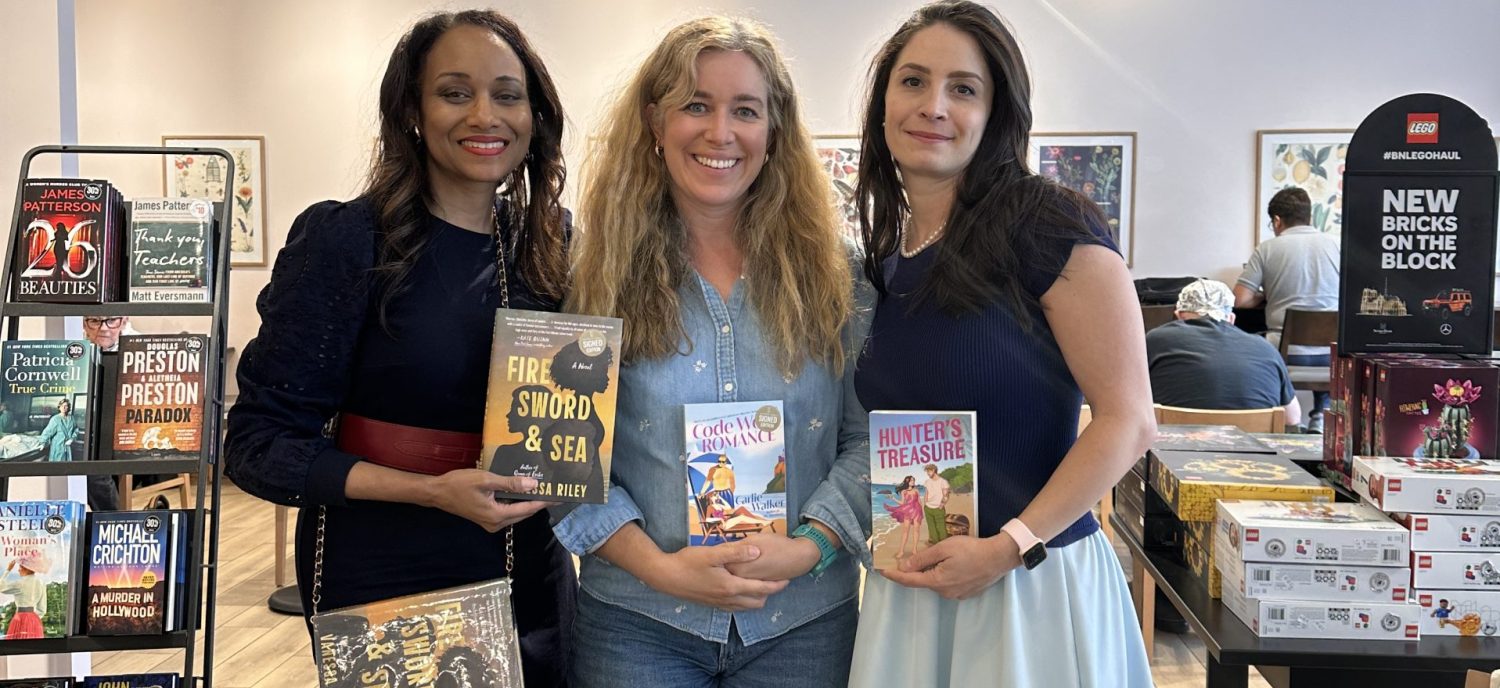
Consider purchasing Fire Sword and Sea from Eagle Eye Bookshop (they have signed copies) or from one of my partners in the fight, bookstores large and small, who are hanging with me.
Come on, my readers, my beautiful listeners. Let’s keep everyone excited about Fire Sword and Sea.
You can find my notes on Substack or on my website, VanessaRiley.com, under the podcast link in the About tab.
Let’s keep rising and creating together. Please like, subscribe, and share the podcast. And stay connected to Write of Passage.
Thank you for listening. I want you to come again. This is Vanessa Riley.
This is a public episode. If you’d like to discuss this with other subscribers or get access to bonus episodes, visit vanessariley.substack.com/subscribe


 loves to dance–it was probably only a matter of time until I wrote about a dancing master. As I say in my author’s note, I learned to dance the box step standing atop my dad’s size 15 triple E shoes. Later, I went on to take every ballroom dance class I could sign up for at the University of Illinois. I even taught a few dance classes of my own through community ed. I enjoyed drawing on all of these experiences to write this book. Like ballroom dancing, I find English country dancing exhilarating, joyful, and just plain fun. I hope to express that joy in the novel.
 JULIE KLASSEN loves all things Jane—Jane Eyre and Jane Austen. A graduate of the University of Illinois, Julie worked in publishing for sixteen years and now writes full time. Three of her books have won the Christy Award for Historical Romance. She has also won Christian Retailing’s BEST Award and has been a finalist in the Romance Writers of America’s RITA Awards. Julie and her husband have two sons and live in St. Paul, Minnesota.
 Period?
 Laurie Alice Eakes – Right now, the only amazing book I’ve read so far and will be reading through this year is the Bible. It’s been a few years since I’ve read through it in a disciplined plan, and am amazed all over again at how amazing is the word of God. Holding fiction reading opinions in reserve as of yet.
 Kristy Cambron – I am in the middle of Sarah Ladd’s new release — The Headmistress of Rosemere. As with her debut, fans of Austen will love book two in the Whispers on the Moors series. I’m planning on getting little sleep until I make it to the back cover! 🙂


