As a nerd, I love patterns. I’m trained to find patterns. But today there is one I don’t want to see. There’s a pattern—and it is costing Black women their lives. Not just in the streets, but in their homes… in their relationships… even in childbirth.

This is a pattern we can no longer pretend we don’t see.
There is a pattern emerging—no, not emerging, persisting—and it is costing Black women their lives.
We cannot keep calling these stories “isolated incidents.” We cannot keep lowering our voices when the truth demands a roar. What we are witnessing is a crisis: intimate partner violence against Black women, compounded by a maternal health system that too often fails them at their most vulnerable. Love should not be lethal. Pregnancy should not be a death sentence. And yet, for far too many Black women, both are becoming dangerous terrain.
In April 2026 alone, we’ve lost:
• Dr. Cerina Wanzer Fairfax, a 49-year-old dentist and mother, killed on April 16 by her estranged husband in an apparent murder-suicide.
• Nancy Metayer Bowen, Vice Mayor of Coral Springs, found dead on April 1; her husband was charged with premeditated murder.
• Pastor Tammy McCollum, 58, killed on April 6 in her North Carolina home by her husband.
• Ashly “Ashlee Jenae” Robinson, 31, a content creator who died under suspicious circumstances on April 9 while traveling with her fiancé after documented domestic conflict.
• Qualeshia “Saditty” Barnes, 36, a pregnant Detroit rapper, shot and killed in Atlanta on April 8, reportedly by her boyfriend.
• Davonta Curtis, 31, a Black trans woman beaten to death on April 8 by her boyfriend.
• Barbara Deer, 51, an educator killed on April 15 in a murder-suicide.
• Ashanti Allen, 23, eight months pregnant, murdered before she could bring life into the world.
Say their names. Hold them in your mouth. Refuse to let their stories be reduced to footnotes beneath the names of the men who killed them.
Because that is what often happens—we learn more about the killers than the women whose lives were stolen.
This is not a coincidence. This is not rare. This is systemic, cultural, and deeply rooted.
According to the Institute for Women’s Policy Research, more than 40% of Black women will experience domestic violence in their lifetime, compared to 31.5% of women overall. The National Center for Victims of Crime reports that 53.8% of Black women experience psychological abuse, and 41.2% experience physical abuse. These are not small numbers. These are not anomalies. These are patterns.
Let me repeat: 32% of all women experience domestic violence. 40% of all Black women experience this violence. This should not be.
Violence against women begins early.
Teen dating violence already lays the groundwork. Data from Basile et al. (2020) shows that about 8% of high school students experience physical dating violence, with girls disproportionately affected—9% of girls versus 7% of boys. Sexual violence is even more skewed: 13% of girls compared to 4% of boys. These are children learning, too soon, that love can hurt.
Then comes adulthood. Then comes partnership. Then, for many, comes pregnancy.
And pregnancy—what should be a sacred, supported, protected time—becomes one of the most dangerous periods in a Black woman’s life.
The Centers for Disease Control and Prevention (CDC) reports that in 2023, Black women experienced 50.3 maternal deaths per 100,000 live births, compared to 14.5 for White women. That is more than three times higher. The Kaiser Family Foundation (KFF) confirms this disparity persists across income and education levels. This is not about individual choices. This is about systemic failure.
Even more devastating: over 80% of pregnancy-related deaths are preventable.
Preventable.
Let that word sit with you.
Black women are dying not because we don’t know how to save them—but because we are not saving them.
Structural racism, provider bias, unequal access to care, and the chronic stress of navigating a world that devalues Black womanhood all contribute. Black women are more likely to be ignored when they report symptoms, more likely to have their pain dismissed, and more likely to receive delayed or inadequate care.
When you layer that on top of intimate partner violence, the risk multiplies.
What is this pattern telling Black women?
Work. Survive. Endure. But do not expect to be protected. Do not expect to be safe in love. Do not expect to be heard in pain.
Is that the message?
Because if it is, then we must reject it—loudly, collectively, and without apology.
I am one of the lucky ones.
I have a loving husband. I was supported. When complications arose during my pregnancy—when my daughter Ellen’s heart rate dropped in half with every push—my doctors and nurses listened. They acted. They ordered an emergency C-section. They saved her life. They saved mine.
My daughter is alive and thriving today because I was heard.
But I should not be the exception.
My story should not sound miraculous. It should sound standard.
Advocacy should not be a privilege. Quality care should not be a lottery. Survival should not depend on luck.
And safety—safety in our homes, in our relationships, in our bodies—should never be negotiable.
On that X platform—yes, I haven’t found a way to quit yet—I saw a post by Bishop Talbert Swan. He quoted Malcolm X, who said, “The most disrespected person in America is the Black woman. The most unprotected person in America is the Black woman.”
Then he had a call to arms:
That truth still echoes today.
We cannot protest violence in the streets and excuse it in our homes.
We cannot call out injustice from systems and ignore harm within our communities.
We cannot demand accountability from others and remain silent among ourselves.
He said Black men must hold other Black men accountable. I agree. I can check on my husband, brothers, and nephews and make sure they are in good headspaces, and, as much as I can, make sure they are in healthy relationships. I need everyone else to do the same.
We need to be our brothers’ keepers. But we also need to be our sisters’ refuge. When she is in trouble, we need to be safe spaces. We need to help advocate in those moments when she is weak and vulnerable.
Our love and care should not be in whispers—not one way in public and absent behind closed doors. If you need help, get it. Call 800-799-7233 or text BEGIN. These are 24/7 resources for help.
I spoke with multi-published romance author Jacquelin Thomas who recently completed her Master’s-level coursework in Clinical Mental Health Counseling for advice for my audience, she said, “In moments of domestic violence crisis, the priority is safety—not resolution. A safety plan should be simple, practical, and personalized. It should include identifying a safe place to go in an emergency, having a list of trusted people to contact, and keeping important items ready (such as ID, medications, keys, a prepaid cell phone, and cash).” She also said to plead with my audience, to prioritize immediate safety.
Click here for a A Safety Plan.
Save your life, the life of your children or spouse—leave.
Please don’t care about image. This is about lives.
The violence, the lack of care—it is a symptom of patriarchy. It’s control and entitlement.
Don’t let anything keep you from getting help. Protecting women is not optional. Protecting Black women, children, and babies is not negotiable.
If we fail to confront this—honestly, boldly, and without deflection—then we are guilty. We should not be the ones writing tweets saying we wished we had done more.
To all those touched by domestic violence or the lack of maternal care, I offer you prayers and wishes for peace.
We have less than two weeks left in April. Let’s not have more names to say. But let’s keep the ones who have fallen victim in our thoughts., in our prayers, on our lips, and please:
Hold abusers accountable—no matter who they are.
Send grace and love to your Black sisters.
Our survival should not be luck.
Being Black should not require survival against the odds. Being a woman should not increase the risk I endure because I chose love. Survival should simply require the right to breathe.
This week’s book list includes:
Killing the Black Body: Race, Reproduction, and the Meaning of Liberty by Dorothy Roberts Essential reading on how systems have historically controlled and endangered Black women’s bodies.
Rising Strong— Brené Brown Helps unpack silence and transforms the way we live, love, parent, and lead.
Prophetic Fire: Poetic Litanies of Justice and Liberation by Bishop Talbert Swan is a blend of poetry and activism.
The Housemaid by Freida McFadden is a psychological thriller involving manipulation, control, and hidden abuse in a domestic setting. As the Guardian says, these kinds of thrillers are popular for exposing how violence can hide behind “perfect homes.”
Any book by Jacquelin Thomas but try Samson. Samson is about a man who’s lost his way finding his way back. I am so proud of madame counselor. You can find Jacquelin on Therapy Finder. It’s not often you can get help from an author hero.
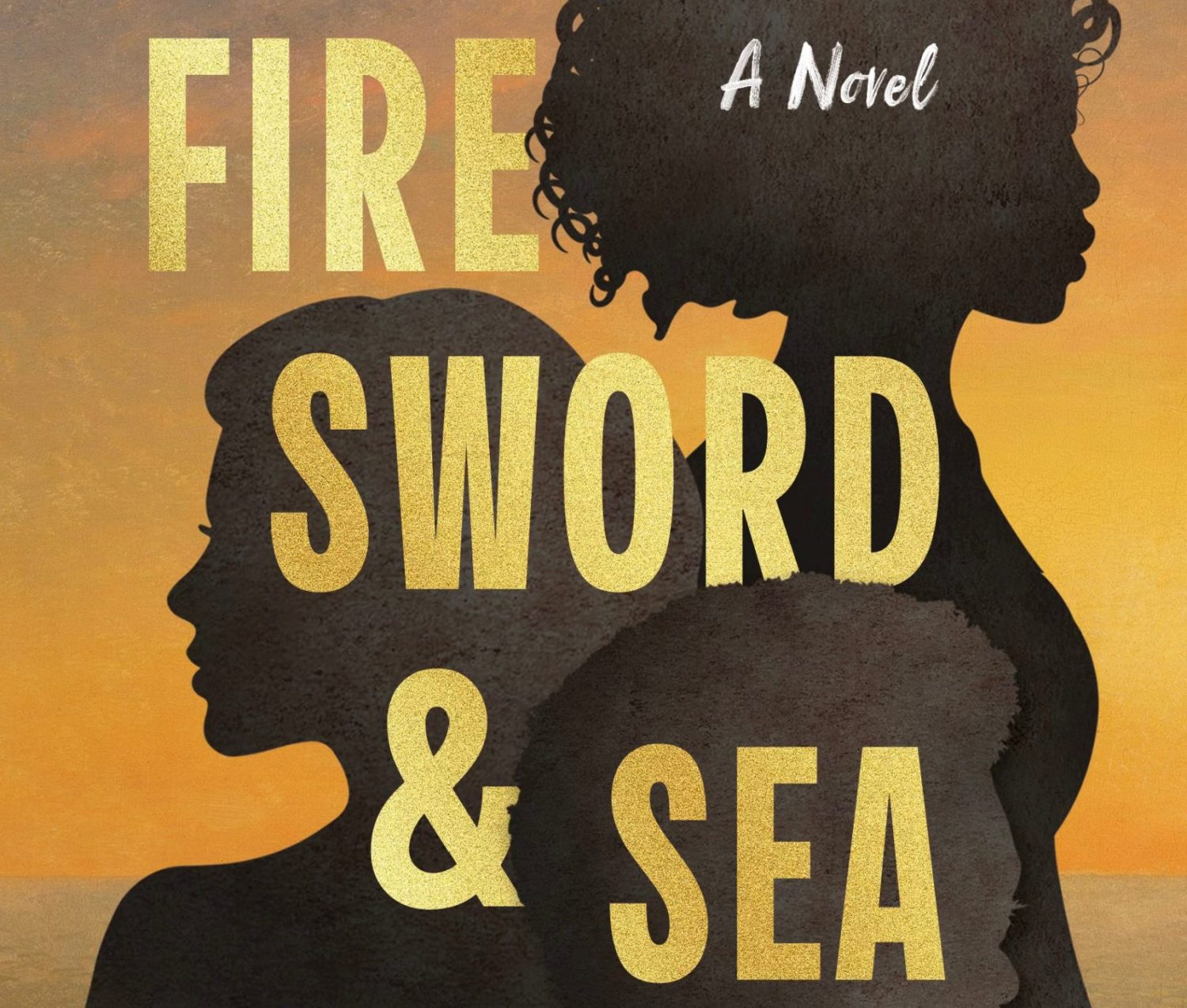
And if you just want to raise a sword and slay the dragons, consider purchasing Fire Sword and Sea, my latest release and all these books from The Black Pearl Bookstore. They still have a few signed copies of Fire Sword and Sea.
You can also try one of my partners in the fight, bookstores large and small, who are in the trenches with me.
You can find my notes on Substack or on my website, VanessaRiley.com, under the podcast link in the About tab.
Enjoying these essays? Go ahead and like this episode, share, and subscribe to Write of Passage so you never miss a moment.
Thank you for being here.
I want you to come again. This is Vanessa Riley.
This is a public episode. If you’d like to discuss this with other subscribers or get access to bonus episodes, visit vanessariley.substack.com/subscribe
