Category: Government

More Caricatures from the Regency Era

In November, we looked at James Gillray and some of his more famous caricatures from the Regency Era. Today I wanted to introduce another caricaturist and illustrator, George Cruikshank. George was the son of caricaturist, Isaac Cruikshank (a contemporary of Gillray’s), and apprenticed with his father at an early age. After spending a decade or so making caricatures, George then turned his attentions to book illustrations. The most notable of his illustrations are those he did in the 1830s for his friend, Charles Dickens.

Cruikshank British_valour
From 1813, this mocks American boasting in the face of the British Navy.

This mocks some of the rather impractical fashions of 1818
This mocks some of the rather impractical fashions of 1818.

This mocks servants trying to act as their masters in the kitchen
This mocks servants trying to act as their masters in the kitchen.

This is one of Cruikshank's numerous illustrations for Oliver Twist.
This is one of Cruikshank’s numerous illustrations for Oliver Twist.

Do you like any of these caricatures and illustrations? Do you prefer the ones that satirize regular life or politics? Why?

Originally posted 2014-02-27 10:00:53.

Why Regency?

If you’re reading this blog, chances are you are a fan of the Regency fiction genre. You’re all about high-waisted dresses, chaperones, Almack’s, Gunther’s, house parties, and more.

But do you know why there ever was a Regency? It was madness! The madness of King George III. His health required the contingency plan of a prepared handing off of the reins of power – this plan laid out a form of emergency government/royal powers which was known as the regency. It’s a situational set-up for when a monarch is unable to fulfill his duties.

You can’t uncrown a living king, right? So, in their wisdom, the high advisors of the land made the Prince of Wales, eventually Goerge IV, the Prince Regent.

King George III (king during the American Revolution) had a disease now thought to be Porphyria. Porphyria is a rare blood disease and drove the king to complete madness and seclusion in 1810.

King George III
(“Farmer George”)

For Americans, King George III is a vaguely hated figure, because of the Revolutionary War, but he doesn’t sound all bad. His nickname was “Farmer George” due to his keen interest in agriculture. Said to be a devout Christian, he was a dedicated, yet repressive parent (not enough grace?), a faithful husband, and a plain-living man. The information about his interests is fascinating, if you decide to learn more, and the manner in which his first born son rebelled is an instructive cautionary tale.

The Prince Regent,
King George IV, (“Prinny”)

Do you enjoy knowing the nicknames of historical figures? If you know some, please share in the comments.

Originally posted 2014-01-13 10:00:00.

Market Towns: The Mall of the Regency

Kristi here. Imagine for a moment that you are a resident in a small town in Regency England. You have a small garden, perhaps a farm. Maybe you are in trade and live in town. No matter where you live, one thing is sure: At some point you are going to want or need something and you’ll have to buy it from someone else.

Where would you go if you needed a few more chickens or a bushel of apples? The market, of course.

If you lived in a large town, such as London, there were several markets to choose from, open all week long. But, if you lived farther out, you had to travel to a market town.

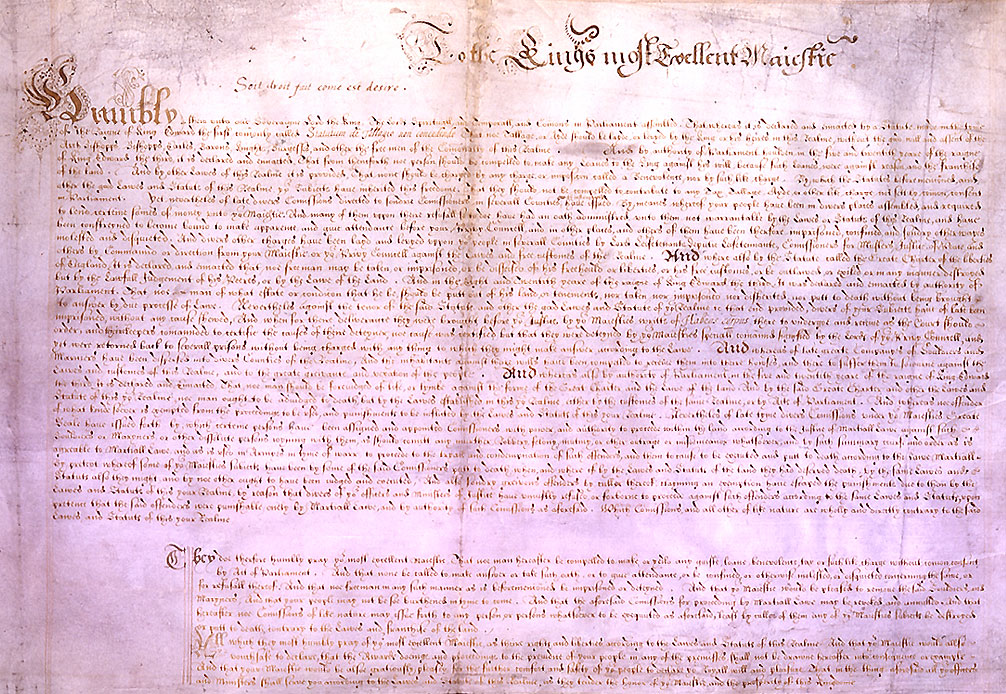
New charter (1553) replacing the original charter (1196) and allowing the town of Stratford on Avon to hold weekly markets.  Click picture for more details.
New charter (1553) replacing the original charter (1196) and allowing the town of Stratford on Avon to hold weekly markets. Click picture for more details.

Market towns had existed in England for centuries. There were, in fact, strict rules as to which towns could hold a market and which couldn’t. Towns had to apply for a royal charter if they wanted to hold a weekly market. If a market town already existed within a day’s walk (there and back) the town could not hold a market.

Chichester Market Cross
The Market Cross in Chichester (Wikimedia Commons)

Many towns had a market cross in the middle of the designated area. The actual meaning of the crosses is unknown and theories are as varied as the cross designs. Possibly the religious landmark was to curry God’s favor on the proceedings. It could also have stood as a reminder to the vendor and the buyer to deal fairly with one another. Still another option is that it hearkened back to the original, informal markets that grew up on the grounds around the churches.

Whatever the reason, some of these market crosses became very elaborate, more along the lines of pavilions or buildings than mere religious icons on a tall pillar. Some towns even constructed their roads with the markets in mind. One example is Stow on the Wold in Gloucester whose narrow side streets were designed to make managing herds of sheep easier.

Since many people lived spread out across rural England, market days (typically Saturdays) were their only opportunity to acquire what they needed, unless they could go directly to someone local to barter or buy. Farmers and craftsman would bring their wares to town and set up stalls along the extra wide main streets.

Norwich market
Norwich Market, 1799 (Wikimedia Commons)

As leisure travel increased in the Georgian era, some market towns, such as Norwich, became fashionable shopping destinations. Permanent stores grew up around the market places, but transitional and temporary stalls were still used for the weekly market.

Today, many of these towns still hold a weekly market, though you’ll more likely find purses and technology accessories than a chicken and a sheaf of wheat.


Originally posted 2013-09-04 10:00:00.