Category: Politics

Write of Passage: The Sensitivity of Sensitivity Reads

The Sensitivity of Sensitivity Reads

One of my first essays on Substack, when I was testing out what I wanted to do, was about my editing process. Before I began podcasting, I was exploring my platform and had just gone through a brutal but necessary copyedit, and I wanted to talk about the lessons learned.

Write now in the ethos of publishing is a bit of a scandal about a writer when given feedback about an offensive bit of dialog in their novel, decided to keep it in to show the main character as “flawed.” Yes, racism is a flaw. Expressions of racism in a main character, a romantic hero is a flaw. I really do like my romance novels, well all novels without a side of microaggressions.

Some people argue that everyone is too sensitive or “too woke.” Others seem to long for a time when publishing was less scrutinized, less inclusive. You know, when inflammatory content could be published without consequence. Some long for the so-called “good old days” when most books catered to a dominant perspective reinforcing loud stereotypes, atmospheric patriarchal notions, or subtle supremacy.

Words are powerful. They can expand imaginations and help build better societies. When an author is not sensitive to the needs of others, that author will be found arguing with reviewers on social media, making faux apology videos, and getting publishers in trouble. If the scandal arising from publishing microaggressions, stereotypes, cultural appropriations, or racist and ableist sentiments is big enough, that author may face bans or delays in publication. If they have a fan base, they’ll be alright. I just don’t think it’s not worth it. No insensitive hill is worth dying on.

I’m 27 books into this process—twenty-five published, with number 26, A Wager at Midnight, set to release March 25. I value opinions, especially those different from mine or from perspectives and backgrounds unlike my own. I actually get nervous when an editor gives little to no feedback—I want it all. Iron sharpens iron. Critiques are how writers improve.

So let me pull back the curtain and share my process and how edits and sensitivity fit in the writing process.

First, I write the worst draft in the world. ➡ Revise ➡ Then Revise Some More ➡ Developmental Edits ➡ More Revision ➡ Sensitivity Review ➡ Copyediting ➡ Proofreading ➡ (And Pray—throughout!)

Worst Draft in the World

Every writer has to know how they write. I know my first draft needs to be between 25-30% of the final book’s word count. Any more than that and I’ll overwrite the book when I revise. That first draft is naked. I spend time, revising adding mood, colors, setting, historical touches, and emotional depth. I usually revise the awful-no-one-will-ever-see-it draft three times before going to the next stage.

Developmental Edits

Developmental editing tackles the big-picture elements: story structure, pacing, plot, character arcs, and themes. This stage addresses questions like: Does the story flow logically? Are the characters well-developed? Are there plot holes or inconsistencies? What’s the message? What’s the theme?

For every book I write, I hire a freelance editor. My Felicia gets the manuscript before my acquiring editor. Why? I want to turn in the best possible version of this book. So that editor won’t have to spend time plugging plot holes, catching redundancies, etc. One time, Felicia caught when I’ve changed character names mid-story. She knows me—and more importantly, she knows what I’m capable of delivering. I can confidently hit send to my acquiring editor knowing the manuscript is good. My editor gets it, and with their input, we can make a great book.

Back to Revisions

Back in my hot hands with my editor’s notes, it’s time to revise the manuscript again. This is my chance to refine it. I will rewrite sections and cut stuff. I’m rarely asked to expand—such is the happenstance of being a wordy, word-loving author. But I’m brutal at this stage. No word, storyline, or character is safe. I will cut. I will cut with abandon. In my next historical fiction coming January 2026, I cut 55,000 words. Let me say that again. Fifty-five thousand. Yes, it sucked. It hurt. It’s not like I can just put these words into another book but it was the best call. The book is better for. I believe in my editor’s feedback. I’ll do what’s necessary to send readers the best book.

At this point we’re in good shape. Let’s get back to being sensitivity.

The Sensitivity Touch

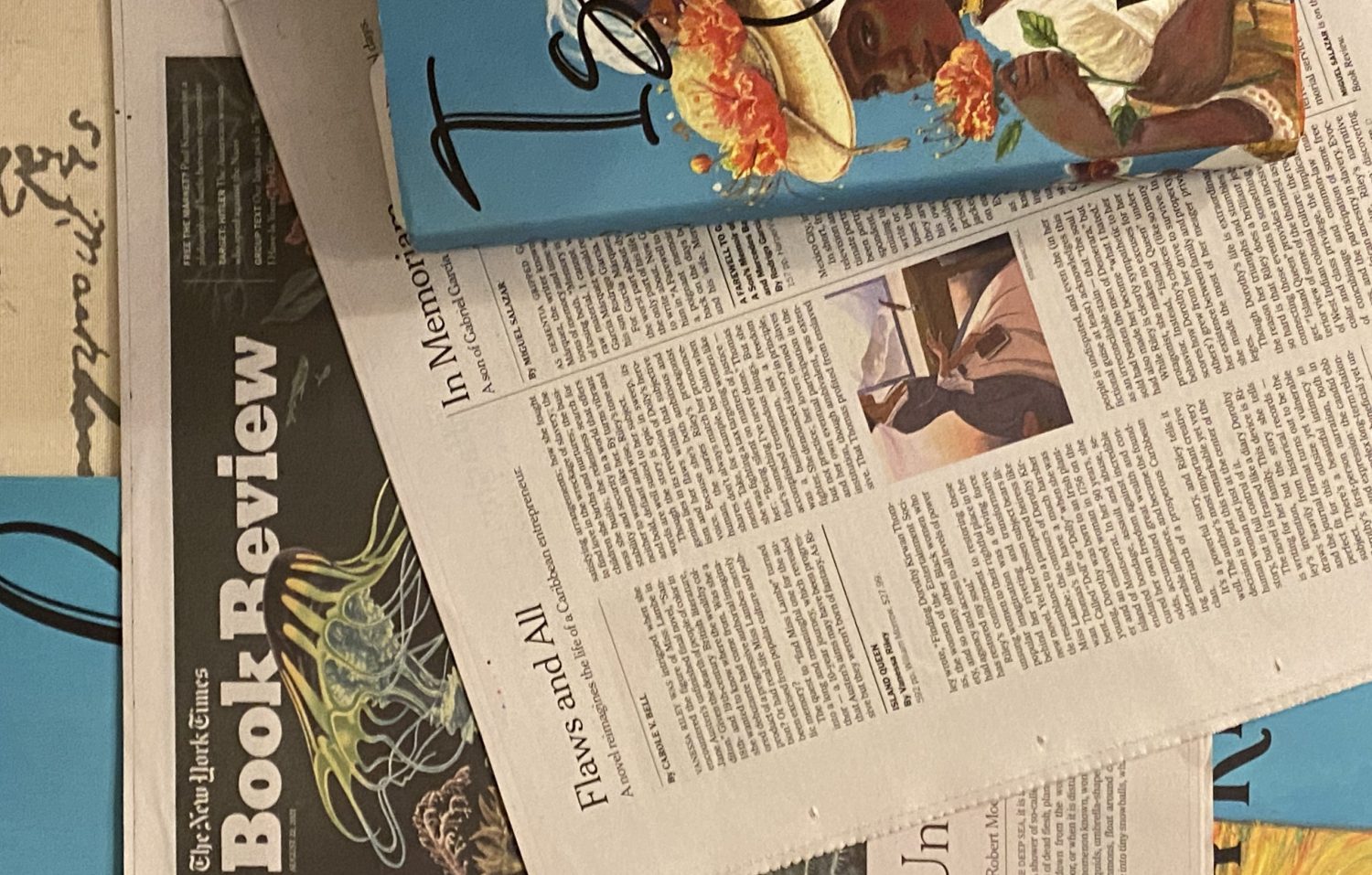
Sensitivity readers are supposed to review the manuscript to ensure your beautiful words doesn’t offend, get you sued, or put you on a watch list. Every one of my historical fictions—Island Queen, Sister Mother Warrior, Queen of Exiles– has been subjected to sensitivity reviews. My editor, publisher, and I want to make sure these books are accurate and respectfully represent cultures, identities, and historical events.

It’s a crucial step. It can’t be overlooked when tackling diverse characters or sensitive topics. Look, I am Black. I’m of Caribbean descent. Dad was Trini and Ma was Southern Baptist Black. I don’t get a pass to say I can automatically write about Haitian or Jamaican cultures. I do meticulous research about the most minute details, because I take my responsibility very seriously to represent these cultures and ancient peoples with respect. But I’m not perfect. I want the help. I need someone to kick my manuscript and put it through the emotional-cultural wringer before I get lit on fire by putting something out that’s wrong or, worse, offensive.

Sensitivity readers provide essential notes on areas that may inadvertently cause harm or perpetuate stereotypes. Writers, we are not supposed to do harm. Stories have power. They have a life and energy of their own. Authenticity and inclusivity elevate your writing. Don’t you want positive impact?

Copyediting and Proofreading

We’re not done. Copyediting and proofreading take our writing to the finish line. Copyediting hones in on the finer details and examines grammar, punctuation, sentence structure, consistency, and clarity. The previous edits have messed with the story a lot. A copyeditor should identify errors and flag inconsistencies. A good copyeditor will highlight blocking (the entering and exiting of characters from a scene) repetitive words or phrases—those dreaded echoes! A great copyeditor will teach you something. I recently learned that “hubris” wasn’t used until the mid-19th century—a fascinating tidbit for a proud historical fiction writer trying to write a 17th century novel.

Proofreading

A proofreader does a final pass before publication. They catch lingering typos, formatting issues, and minor errors that slipped through earlier stages. Even the most seasoned author can’t catch every mistake, not on their own. Proofreading ensures your book meets top quality standards.

My Mantra for Edits

All the hard work in crafting a story means nothing if you neglect editing or decide on a whim to leaving in something “flawed” for kicks. Welcome to my Ted talk:

* Absorb the critique: It’s not an attack—it’s insight. Sensitivity edits aren’t judgments on you, but your characters. Listen to the wisdom.

* Weigh the Critique: There’s a difference between personal preference and a flashing red light—know which you’re dealing with.

* Have Your Sources Ready: Have your references handy to support accuracy. Include them in your author’s note. Someone is bound to have the question. (PSA: Always add an author’s note.)

* Query, Don’t Assume: Never make a decision to revise—or not—based on assumptions. Challenge both your own and your editor’s perspectives. Make sure neither is rooted in a colonizer’s lens—unless you’re literally writing about Christopher Columbus. (Example: A copyeditor once tried to tell me the Khoe people were incorrectly addressed. That I shouldn’t call them by that name or “Khoesans” because it was created in 1928. The Khoe have existed since 2300 BC. My book was set in 1675. I think Khoe is good. Source documents are in the author’s note.

* Question Dialogue and POV: Read the editors notes. Sometimes they are right about things sounding “too formal or stilted.” Read actual correspondence from the period. It will surprise you about how informal things can be. Make sure you read James by Percival Everett or Lady Tan’s Circle of Women by Lisa See, two masterful uses of dialog entwined to tell ancient stories for the modern audience.

* Be Humble: Negative feedback stings, but it’s a tool for growth. Questions and queries are opportunities to clarify, refine, and strengthen your work.

* Avoid Harm: Represent cultures with authenticity and respect. Sensitivity edits help you sidestep pitfalls that could undermine your credibility.

* If someone flags an issue, fix it: Even if you don’t see it as a problem, take it seriously. If one reader finds something harmful or offensive, chances are others will too. If you are dealing with fictional characters, you can change stuff. If real people are jerks, that’s harder—see A People’s History of the United States” by Howard Zinn to learn or debunk ideas about the horrid exploits of Christopher Columbus. I don’t believe in whitewashing or hiding the truth. Dismissing concerns as “not a big deal” is a failure. It is a big deal. Rise to the moment.

Editing is an investment—not just for your benefit but for your readers. Every stage—developmental edits, revisions, sensitivity reviews, copyediting, and proofreading—are needed to make your novel the best it can be. Your story, your readers, and your publisher deserve that effort. Don’t be defensive. Do the right thing.

Show Notes:

This week we are linking to FoxTale’s Bookshop through Bookshop.org.

Books by Vanessa Riley:Riley, V. (Year). A Wager at Midnight. [Publisher].Riley, V. (2021). Island Queen. William Morrow.Riley, V. (2022). Sister Mother Warrior. William Morrow.Riley, V. (2023). Queen of Exiles. William Morrow.

Other Fiction & Nonfiction Books:Everett, P. (2024). James. Doubleday.See, L. (2023). Lady Tan’s Circle of Women. Scribner.Zinn, H. (1980). A People’s History of the United States. Harper & Row.

(Bonus) Writing & Editing Book:Browne, R., & King, D. (2004). Self-editing for Fiction Writers: How to Edit Yourself into Print (2nd ed.). William Morrow.

This is a public episode. If you’d like to discuss this with other subscribers or get access to bonus episodes, visit vanessariley.substack.com/subscribe

Originally posted 2025-03-04 14:10:00.

Write of Passage: Why I Stayed

On December 6, 2024, I sat down to write my feelings after licking my wounds from the America I woke up to on November 5. 2024.

The country felt less kind. Definitely, less gentle. This America willingly choosing boisterous, noisy incompetence, and the awful idea that your neighbor stole your opportunity. This choice was madeover competence, compassion, and stable beef prices.

So I did what I know how to do.

I wrote my feelings. I put pen to paper—or more accurately, fingers to keyboard—and I put all my thoughts and my heart on to the page. This essay launched my Substack.

I wrote a quote:

“But mama, I’m in love with a criminal,

And this type of love isn’t rational, it’s physical.

Mama, please don’t cry, I will be alright,

All reason aside, I just can’t deny, I love the guy.”

– Britney Spears, “Criminal” (Femme Fatale, 2011)

This was my Luigi Mangione phase.

To be honest, I was confused about Substack. Is is a newsletter? Is it a social media? Is it something else. But once, I played with the format and tossed up a podcast post, and you guys downloaded it, I got bigger ideas and turned to you guys for accountability. I would write one podcast essay for a year.

So the first podcast episode/ essay was The Weight of “Diverse”. My take of what was happening in publishing. Thrilling. And you tuned in. We’re almost at 17,000 downloads and hundreds of thousands of Substack views.

This was a unique challenge. I’m glad I stuck with this form of writing.

But, people often say, Vanessa, you write books. You’re always writing your heart. And that’s true. But there’s also a distance when I write about other people’s lives. It’s not me. I’m not the main character. Writing good historical fiction, romance, or mystery requires analysis. It requires restraint. I don’t pass judgment on the lives I’m bringing back to you.

In Sister Mother Warrior, I could not fault a Dahomey Warrior from following her king’s orders to sell captives any more than I can pass judgement on a 2025 sailor following his naval chief’s commands to bomb a fishing vessel. It’s the commanders of US Forces in the Caribbean and its chain of command that bringing back pirates.

But I digress.

If I were Jacquotte Delahaye, I might’ve stayed in the kitchen in Tortuga making soup, not run away to live a dream as a pirate. As a writer, I have to make their chaos—make sense. Otherwise, I’m not doing you the reader any good. And I refuse to dishonor the lives I’ve been entrusted with.

Everything I write in those books is layered on hard-fought facts: databases, archival digging, obscure records, and I do whatever it takes to bring readers closer to secret history, closer than they’ve ever been before.

Why?

I’m tired of women, particularly Black women and women of color, being portrayed as only victims in history. As if they survived history only through endurance, servitude, or some narrow “mammy-fixation” lens. My work insists they were complex, capable, and human.

But writing these weekly essay—this space—was different.

The first essay I wrote here was messy. Conflicted. It carried my trademark style to walk readers into someone else’s shoes, even when that perspective is uncomfortable. It also came with a promise I made to myself: that here, I would be open. Vulnerable. That I would talk to you as friends—friends willing to sit with my essay and listen.

For 52 weeks—an entire year—I’ve shown up. Most Mondays, I record in the evening, setting everything up so that by Tuesday at 9:10 AM, you’d receive something new. A weekly offering. A kind of fresh manna. Each episode was labor but it’s also a small love letter from me to you.

I’m, unapologetically, a write-aholic. But keeping that pace hasn’t been easy. There were nights I wanted sleep more than words. Days when another book’s edits or word count loomed. But when I commit to something I believe matters, I show up. I do the work.

For 52 weeks, you’ve allowed me to stand on the proverbial rooftop and shout my thoughts into what could have been a void.

But it wasn’t a void. You were there—listening, encouraging, learning, reflecting. Thank you.

This work takes effort. Real effort. From shaping ideas to wrestling them into coherence, then editing and distributing across platforms. We won’t even get into the technical gymnastics of getting everything out into the world.

Still, I’m grateful. I’m grateful we’re on Substack. On Apple Podcasts. On Spotify, iHeartRadio, Amazon Music, Spreaker, and YouTube. Each platform grows at its own pace, each teaches me something new. And I’m especially grateful that you are here.

As we head into the final weeks of 2025, I want to be clear: I’m not going anywhere.

Season Two begins next week. For the most part, this new year will continue as a weekly offering—my thoughts, shaped into essays. Occasionally, I may invite a guest, someone I’m learning from, someone who stretches my thinking. But this is not an interview show. There are plenty of those already. This space remains what it has always been: a place for reflection, curiosity, and shared thought. And when something special comes along, I’ll bring it here first—to my friends.

So thank you. Truly. Thank you for tuning in every week. For commenting, sharing, downloading, and telling others about this podcast. In some dark moments this year, your presence mattered more than you know. To everyone who has paid a subscription, you have blessed me. If I don’t have your mailing address, please email it to me. I have a writing journal that I’ve designed that I want to send to you.

And finally as I close Season One, I’ll leave you with this encouragement: we all have a right of passage. But I don’t want us to sail past each other like ships in the night. I want us to sit together—to talk, to think about the bigger ideas and the higher places we might go, together.

This week’s booklist is last week’s spotlight. Books coming out in January that need a little more love:

With Love, Harlem by ReShonda Tate — This is a fictionalized version of Hazel Scott’s story.

The Seven Daughters of Dupree by Nikesha Elise Williams — A multi‑generational family epic following seven Dupree women.

Burn Down the Master’s House by Clay Cane — A searing, urgent exploration of race, identity, and power .

Last First Kiss by Julian Winters — A second‑chance, slow‑burn romance about an Atlanta event planner.

Happy Habits for Successful Women by Valorie Burton — A practical, empowering guide that encourages women to adopt mindset and behavioral habits to become healthier, more resilient, and more aligned with their goals and values.

Behind These Walls by Yasmin Angoe — A twist‑driven psychological thriller in which a woman infiltrates a wealthy family’s mansion under false pretenses.

Murder From A to Z by V.M. Burns — A cozy‑mystery in which bookstore owner and and her sister uncover sinister dealings at a retirement village.

This week, I’m highlighting The Book Worm Bookstore through their website and Bookshop.org .

Consider purchasing Fire Sword and Sea from The Book Worm Bookstore or one of my partners in the fight, bookstore’s large and small who are in this with me.

Come on my readers. Let’s get everyone excited for January reads.

Show notes include a list of the books mentioned in this broadcast.

You can find my notes on Substack or on my website, VanessaRiley.com under the podcast link in the About tab.

Enjoying the vibe? Ready for Season 2? Go ahead and like this episode, share, and subscribe to Write of Passage so you never miss a moment.”

Thank you for listening. Hopefully, you’ll come again. This is Vanessa Riley.

This is a public episode. If you’d like to discuss this with other subscribers or get access to bonus episodes, visit vanessariley.substack.com/subscribe

Write of Passage: We Write, We Win

I started writing essays because my mind battled deep disappointment over the state of division in my country. My consciousness is bias, tragically etched with memories of when character mattered. Remember when we all wanted to be president? I remember holding civic medals I’d won in elementary and high school. I recall lifting people up on pedestals and telling younger versions of ourselves, “That’s who I want to be. That’s who I want to emulate when we grow up.”

Heroes of the Haitian War —Empress Marie Claire, Warrior Gran Toya – Art by Tonya Engle for William Morrow—Sister Mother Warrior

That sentiment is gone. People in power are deeply flawed, or their flaws are more obvious. And it’s not just politicians. We look at sports heroes and entertainers and see waves of brokenness—people performing for show, lacking integrity, and becoming poster children of bad behavior. That is why authenticity feels so refreshing, why it can grip the zeitgeist of a nation and have us talking about it, creating YouTube videos and Subtacks on the subject, even spinning reels and threads—finding more ways to tap into our fount of creativity.

We are hungry for authenticity, for authentic creation.

Now, I’m not advocating for perfection. Every writer knows the pitfalls of striving for perfection. We wrestle with word choice, sentence structure, even the order of ideas. We can edit something so many times that our original vision becomes unrecognizable. Yet, we push forward because the act of creating is essential. It’s the breath in an artist’s lungs.

Our better angels—our novels of truth, our canvases of color, our songs of freedom, our quilts of existence, our visuals of life—are needed more than ever. We are hungry for authenticity, for authentic creation.

Our appetites are satiated in low-calorie burns. Scrolling for kicks, laughs, angry takes, and escape is common. But social media, the hellscape that it is, can be a respite or a drug. And I must say, I am confused about the self-induced stupor of tearful videos of people who voted against their own interests, now seeking the world’s sympathy as they grapple with consequences—lost jobs, lost funding, lost farms, and lost hopes. It’s painful to watch. It’s also jarring to see them admit that this consequence is only a problem now because they suffer. I did a podcast about the loss of empathy. I just didn’t expect an equivalent rise in blindness to FAFO.

I wish harm on no one, but these folks are putting themselves and their business out there and wonder why they are being mocked. Empathy and sympathy need to be learned and earned before they can be demanded from others.

And yet, here we are—still divided, still finding out. We could sulk. We could laugh. We could cry. But I believe the better thing to do is to keep moving forward. That’s how we—the collective, those of like minds, and even new converts to humanity—win. Everyone, we can win. We will win.

There’s a scene I wrote in Sister Mother Warrior—the lead-up to the Battle of Vertières, the drive to push the French out which ended the Haitian Revolution, this is a snippet of the audio performed by Adjoa Andoh and Robin Miles:

Staking the flagpole in the ground, he (Jean-Jacques Dessalines) stopped and looked out at his army. “They divide, but we are consolidated, one family. And this gives us victory…”

Then he gave the signal and pointed us to the hills. “Onward! We will win!” The battle cry of Nosakhere, “Mì nan du déji! We will win!” was music to my ears. Women and men cried out in all the mother tongues of the people born here and those stolen from Africa.

“Yebedi kunim,” Twi.

“A yoo ṣẹgun,” Yoruba.

“Nou pral genyen,” Kreyòl.

“Nous gagnerons,” French.

“Mì nan du déji,” blessed Fon.”

I love that scene—people of all races and nationalities gathering to defeat their common oppressors. Unified they drove the French from Haiti. It took everyone. In America, it will take all of us to win.

The True Fight

We’re not fighting with weapons of war—guns and tanks. We are fighting for minds. The power to unlock thought and passion is creation. How we got here doesn’t matter. Whether orderly or chaotic, it’s not about the process—it’s about the product. What are you making with the time you were given?

The battles can be as small as saving your money by avoiding fast fashion and shopping your closet. Eating and talking about life around the kitchen table instead of eating out. Supporting your library by using it and checking out books by your favorite authors is an act of resistance.

For those who harness their creative genes, making something, delivering art is the ultimate act of resistance. Creating ignites the brain, releasing endorphins and unlocking resilience. Instead of dwelling on despair, we must tap into our inner artist, writer, and creator to make magic in the medium of our choosing. I want this period of time to be a rebirth or renaissance for folk arts, for kitchen experimentation, for the novels we will talk about for the next seventy years.

For every creator out there, I know it feels difficult to make art right now. It feels worse when you know you did your part to keep the world from being set on fire. I often think of my farming grandparents, who lived in the Jim Crow South, educated eight children, and bought over 400 acres of land with mere pennies. If they could plant so many seeds in the face of lynchings, why are we letting fear of people who whine at the first moment of heat or being stoned by pea soup cause us despair? No one should keep us from doing what we must. No one.

History proves that perseverance defies expectations:

· Gran Toya led troops in hand-to-hand combat in her 60s during the Haitian Revolution.

· Fauja Singh began running marathons at 89, setting records in his 100s.

· Ray Kroc turned McDonald’s into a global empire in his 50s.

· Diana Nyad swam from Cuba to Florida at 64 after multiple failed attempts.

· Faith Ringgold gained major recognition for her story quilts in her 50s.

· Cicely Tyson was told she wouldn’t make it because of her dark skin; she won a Tony at 88 and worked until her passing at 96.

· Morgan Freeman became a household name in Driving Miss Daisy at nearly 50.

· Samuel L. Jackson landed Pulp Fiction at 46 after years of struggling with his career. Our Uncle Sam is now one of the highest grossing actors in Hollywood.

And, of course, there are the writers I’ve spoken about:

· Toni Morrison published The Bluest Eye at 39 and won the Nobel Prize in Literature at 62.

· Maya Angelou published I Know Why the Caged Bird Sings at 41 and became a literary icon.

· Octavia Butler faced rejection for years before breaking through in sci-fi in her 40s.

To every creator, hear my voice: Grab your paper, pens, keyboards, fruits, spices, fabrics, glues, paints, resins, threads—whatever you have—and birth a miracle. Create. Art is the first and last sign of resistance.

The work isn’t done. We resist by creating. My art—my words—exist to empower Black women, foster sisterhood, and restore the world to a place where we are our brothers’ and sisters’ keepers. The ancestors say we will win. I believe them, and I believe in us.

To read about inspiration and resistance:

· Letters to a Young Artist by Anna Deavere Smith – A guide to creativity and resilience in the arts.

· Just as I Am by Cicely Tyson – The legendary actress’s memoir, chronicling her journey as a Black woman in Hollywood.

· I Know Why the Caged Bird Sings by Maya Angelou – A deeply personal story of overcoming hardship through art and voice.

· Sister Mother Warrior by Vanessa Riley – A novel about the real women behind the Haitian Revolution, embodying resilience and leadership.

· Wayward Lives, Beautiful Experiments by Saidiya Hartman – A history of Black women who lived on their own terms in the early 20th century.

· Barracoon: The Story of the Last “Black Cargo“ by Zora Neale Hurston – A firsthand account of survival and resilience from one of the last known survivors of the transatlantic slave trade.

Show notes include a list of the books mentioned in this broadcast. This week, I’m highlighting The Book Worm Bookshop through Bookshop.org.

This is a public episode. If you’d like to discuss this with other subscribers or get access to bonus episodes, visit vanessariley.substack.com/subscribe

Originally posted 2025-02-25 14:10:00.

Write of Passage: Get Somebody Else to Do It

Every writer, whether we want to admit it or not, is an entrepreneur. We create a product—a book—and then we turn around and sell it. Sometimes we sell part of our interest to a traditional publisher like Simon & Schuster or HarperCollins. Sometimes we go the indie route, selling directly to readers through a website or through a behemoth like Amazon. But no matter the path, one truth remains unshakable:

We are in business for ourselves.

We are the CEO, the marketing department, the shipping department, the PR team, and the person answering emails at 2 a.m.

We promote the product lines. We show up to the events. We handshake and livestream and book club ourselves into the good graces of the reading world.

I’m doing that now. As we gear up for the launch of Fire Sword and Sea, I’ll will be heading to D.C., Severna Park, Virginia, St. Louis, Mo, Austin, Texas, and of course Atlanta and all her glorious suburbs. Meeting readers is actually one of my favorite parts of the job. There’s nothing like seeing that gleam in a reader’s eye when they tell you what moved them, confused them, or delighted them.

There’s nothing like digging into the myths and the hidden histories that shaped a story.

And when I say hidden, I mean hidden. I will chase a fact to the end of the earth. I will travel to the places I’m writing about. I will battle through foreign language and archivists to get firsthand accounts. I want to return these people to you whole—the people who lived the stories I’m writing.

For Fire Sword and Sea, I boarded an old-time frigate—one that very easily could’ve been a pirate ship back in the day. I wanted to feel what it was like to sleep in a hammock practically touching tens of others, to understand how close the hull was to the crew cabin, to hear the groan of wood and water the same way they did.

There is no way you couldn’t hear the moans of the enslaved in the cargo hold. In the 1600s, human beings were the universal coin. People traded enslaved bodies like currency. That’s how they moved stolen property.

Moreover, the 1600s were wild. Theft was legal if you called it piracy. Danger was so normal it barely had a name. But it was also a time of reinvention. A time when you might have to disguise yourself—your gender, your class, your entire identity—to have the life you dreamed of.

And honestly? It doesn’t feel that far from being a small-business owner today. We change disguises, the various roles, to get our jobs done. And sometimes we forget why we got into this in the first place. We forget passion. And focus on market shifts. We ignore hunger to unleash something new into the world and get stuck in all the boxes that have to get checked—editing, research, marketing, PR, scheduling.

Recently I found people fight you or deprive you of resources when they don’t want your story told. In business, a Walmart will come and undercut you to price you out of the market. In the writing world, it will be the use of algorithms or the lack of oxygen to starve a book.

Sadly, some folks don’t want the truth. They don’t want to hear of a world where everyone could become a slave. They definitely don’t want to hear women who escaped and became pirates who led and commanded ships. I really think, some wanted me to write about a jolly old male crew singing sea shanties all day.

In Fire Sword and Sea, you’ll get adventure. You’ll get sailing crews. You might even get a spirit filled song asking for God’s vengeance. I wrote the truth. You’ll see the complicated leadership choices women in disguise had to make. You’ll see the danger of wanting something so badly that you risk everything to get it.

You’ll see the success, the heart break, and the compromises that may rot the soul.

Back to my small business.

Right now, I’m negotiating dates, confirming travel, juggling time zones, sorting release-week logistics—not to mention championing every other author whose book is coming out in January. It’s prime season. Prime real estate. Everyone wants and needs attention. I am no exception. If you preorder Fire Sword and Sea, I hope you feel the stories worth, believe the hassle, the grind, the late nights, and the tears.

But Lord… how many times have I said to myself, “I wish I had somebody else to do this”?

Let me bust a myth: even if you’re traditionally published, for the most part nobody is swooping in to handle your career or your new shiny book. You will still grind. You will still hustle. Traditional publishing gives glamorous promises—books everywhere, audiobooks, store distribution—but it does not give you a full marketing staff or sometimes the feeling that they give a damn.

Indies wear about 50,000 hats. Traditional authors wear about 32,000. Either way, your neck and back are still tired.

And that is why every writer—I don’t care which path you choose—has to ask:

What are you willing to do to have what you truly want?What are you willing to carry?How high are you willing to climb to make people hear your story?

Because at the end of the day, there is no one else. There’s no system. No machine. No cavalry.

There’s only you.You, shouting your story from every rooftop.You, standing on every chair.You, daring the world to listen.

We’re less than a month away now, and soon I’ll be taking Fire Sword and Sea across the country to talk about Jacquotte Delahaye, Lizzôa Erville, Michel Le Basque, Laurens de Graaf, and more: pirates who were—brave, reckless, brilliant. You will see them take to the took to the sea because no one else would do it for them.

Maybe that’s the lesson for all of us.

In the end, there is no one else.

There’s only the person who wants the dream badly enough to carry it forward.

And that person… is you.

This week’s booklist are books also coming out in January that need a little more love:

With Love, Harlem by ReShonda Tate — This is a fictionalized version of Hazel Scott’s story. She’s a jazz prodigy, a glamorous film star, a fierce advocate for civil rights, and she breaking barriers and rules.

The Seven Daughters of Dupree by Nikesha Elise Williams — A multi‑generational family epic following seven women of the Dupree lineage as they unearth dark secrets.

Burn Down the Master’s House by Clay Cane — A searing, urgent exploration of race, identity, and power in America.

Last First Kiss by Julian Winters — A second‑chance, slow‑burn romance about an Atlanta event planner reuniting with his first love when forced to cover a high-profile wedding.

Happy Habits for Successful Women by Valorie Burton — A practical, empowering guide that encourages women to adopt mindset and behavioral habits to become healthier, more resilient, and more aligned with their goals and values.

Behind These Walls by Yasmin Angoe — A twist‑driven psychological thriller in which a woman infiltrates a wealthy family’s mansion under false pretenses.

Murder From A to Z by V.M. Burns — A cozy‑mystery in which bookstore owner and amateur sleuth Samantha Washington and her sister uncover sinister dealings at a retirement village when a seemingly natural death turns suspicious.

This week, I’m highlighting Black Pearl Books through their website and Bookshop.org .

Consider purchasing Fire Sword and Sea from Black Pearl Books or one of my partners in the fight, bookstore’s large and small who are in this with me.

Come on my readers. Let’s get everyone excited for January reads.

Show notes include a list of the books mentioned in this broadcast.

You can find my notes on Substack or on my website, VanessaRiley.com under the podcast link in the About tab.

So Boss, Our stories matter—tap like, hit subscribe, share, and let’s keep this movement going with Write of Passage.

Thank you for listening. Hopefully, you’ll come again. This is Vanessa Riley.

This is a public episode. If you’d like to discuss this with other subscribers or get access to bonus episodes, visit vanessariley.substack.com/subscribe