We are so pleased to once more welcome Jillian Kent to Regency Reflections. Her latest release, Mystery of the Heart, is the last of the Ravensmoore Chronicles books. The love story of these two strong-willed individuals is wrapped in adventure involving a foreign religion, an expensive artifact, and Jillian’s vast knowledge and love of the historic practice of medicine.
Be sure to leave a comment after reading the interview for a chance of winning a copy of Mystery of the Heart. And now give a warm Regency Reflections welcome to Jillian Kent!
Last time you were here, you told us about Chameleon. When is this book set and how is it linked to your previous one?
I’m thrilled to be back here with the lovely ladies from Regency Reflections. Thanks for inviting me back. Mystery of the Heart begins in Northumberland, England in 1819 and primarily takes place in London. It’s the third book in my Ravensmoore Chronicle series and also the last book. This is Devlin’s youngest sister’s story and it will take you on an adventure similar to what you might experience in an Indiana Jones movie but more romantic.
Was there any fun fact about the Regency period that you stumbled upon while researching this book? Any tidbit that sparked your imagination and inspired a plot point of cool character moment?
Yes. I discovered that the Royal College of Physicians had burnt down prior to the one that was rebuilt and present in my story. Via Wikipedia, “The College was based at Amen Corner near St Paul’s Cathedral, until it was burnt down in the Great Fire of London of 1666. The first Harveian Librarian was Christopher Merret.
Both Mystery of the Heart and your previous book Chameleon contain a great deal about period medicine. What sort of struggles did you face writing about two hundred year medical practices in such a way that modern day readers would be able to accept them?
The most difficult thing is making sure the research is accurate and then tell it in an interesting way that makes readers wonder how people in that day and age survived, if in fact they did. I also have thirty-three years of social work experience in psychiatric hospitals, medical hospitals and out-patient facilities. I’ve worked as a counselor for nursing students for the past 17 years in a hospital based college so I’m around medical stuff all the time. I hope I have a knack for pulling readers into the medical practices of the day that keeps them coming back for more. I think it’s fascinating. Maybe that’s why readers accept the telling of those medical practices.
What is your favorite thing about your hero, Lord Eden?
I love his adventurous spirit. He’s not a man to stay in any one place long. He wants to be on the go, but after his journey to Austria he’s tired. And when he returns to England it’s one adventure after another and that includes falling in love with Mercy and dealing with her over protective family.
What drew you to your heroine, Lady Mercy Grayson?
Mercy is the most independent of the women in my three stories. She’s seen and experienced a lot including caring for her sister, Victoria as she was growing up. Then when her brother refused to give up his desire to be a physician when he inherited his estate she desperately wanted to find a way to contribute to society that made use of her talents.
Without giving away some of the key plot points of the book, can you share a little about the vodun that play such a large part in the book?
Interesting that you asked. I never had any desire to write about vodun until I was going through the typical brainstorming phase of getting ready to write the novel. And of course it wasn’t until I sat down and wrote that the men on the ship with Eden took on an entirely different role than what I’d planned and it just kind of bloomed from there. I really think I must have been influenced by all the zombie books and stories I’d been hearing that others were writing. Most probably because my mentor, James Scott Bell, was writing zombie legal thrillers. What a hoot! Zombies and voodoo always seemed to go together. Just goes to show how we writers can come up with strange ideas and make them work to our stories advantage.
What can we look forward to next from you?
I have an idea for a new book and possibly another series that I am running past my agent. I can tell you that it is set during the regency. I’d also like to write some short stories as an addition to The Ravensmoore Chronicles and sell them as e-shorts. I’m thinking of a Christmas story set at Ravensmoore and a short about how Lazarus was found.
Thank you for being here, Jillian! I would also like to thank Charisma for an advance copy of the book.
Want to win your own copy of Mystery of the Heart? Leave a comment below letting us know what you find fascinating about the medical practice 200 years ago or how much you’re looking forward to reading Jillian’s book. You must live within the United States to win. Entries will be accepted through Saturday, February 2, 2013.
The contest is now closed, but you can still purchase Jillian’s book and enjoy her story!
Kristi here. If your home is anything like mine, there have been plenty of sniffs and snuffles passing through this winter. The headaches, congestion, and overall achiness can range everywhere from the annoyance of the common cold to the seriousness of pneumonia.
Today, we know the difference between the flu and a cold, bronchitis and a sinus infection, and a tension migraine and a sinus headache. Or at least, our doctor knows the difference and can help us with the right concoction of pills and vitamins to get us through the discomfort.
The suffering Regency inhabitant was not so fortunate.
Beginning of the treatment section of a cookbook
The scientific study of medicine was just coming into existence as the Regency rolled around. Knowledge of germs and nutrition and the importance of cleanliness were mere inklings of ideas in the heads of the most advanced medical minds of the time. And these men (for they were almost exclusively men) were often scoffed at for their new ideas and practices.
Because medicine was still working to organize and legitimize itself, healthcare fell on the shoulders of the people, or more specifically the women. Cookbooks of the day would contain recipes for home remedies that could be mixed or cooked to aid the ailing.Mothers would also pass down time-honored practices for various diseases, leaving people at the time with a mix of rudimentary science, folk remedy, and medieval traditions. Physicians were so rare and costly that one had to be very rich or near death to call upon one.
So how did they handle the fevers and the sniffles?
Michael Ancher, via Wikimedia Commons
Without decongestants and pain relievers, they were forced to take to their beds for however long it took the body to overcome the bacteria or virus. Because many congestion related disorders were thought to be brought on by cold or damp conditions, sick rooms were often kept warm and dry, with little to no air circulation.
The old axiom “Feed a cold, starve a fever” was also prescribed to, with some ailing patients being restricted to diets of bread and water in the hopes of purging the bodies of the disease.
Some households would have knowledge of herbs and be able to ease the pain with concoctions of willow bark tea while others preferred to drink themselves into oblivion until the worst of the illness had passed.
Other interesting treatments of the time included inducing copious amounts of sweating, stuffing orange rinds up the nose, and colonic irrigation, or cleansing of the bowels.
The second half of the 1800s showed the beginnings of the cold remedies that resemble what we see today. While medicines involving heroin and chloroform have been eradicated, the Vicks Vapour Rub introduced in 1890 is still pretty much the same.
Want to learn more about the history of medicine in England? Check out the online museum from the Royal Pharmaceutical Society. You can link directly to the paper on the common cold here.
Be sure to come back Wednesday, when Jillian Kent will be here at Regency Reflections sharing about her latest book, Mystery of the Heart, which incorporates the quickly changing field of medicine during the Regency time period. Stop by and enter to win a copy of her book.
On December 6, 2024, I sat down to write my feelings after licking my wounds from the America I woke up to on November 5. 2024.
The country felt less kind. Definitely, less gentle. This America willingly choosing boisterous, noisy incompetence, and the awful idea that your neighbor stole your opportunity. This choice was madeover competence, compassion, and stable beef prices.
So I did what I know how to do.
I wrote my feelings. I put pen to paper—or more accurately, fingers to keyboard—and I put all my thoughts and my heart on to the page. This essay launched my Substack.
I wrote a quote:
“But mama, I’m in love with a criminal,
And this type of love isn’t rational, it’s physical.
Mama, please don’t cry, I will be alright,
All reason aside, I just can’t deny, I love the guy.”
– Britney Spears, “Criminal” (Femme Fatale, 2011)
This was my Luigi Mangione phase.
To be honest, I was confused about Substack. Is is a newsletter? Is it a social media? Is it something else. But once, I played with the format and tossed up a podcast post, and you guys downloaded it, I got bigger ideas and turned to you guys for accountability. I would write one podcast essay for a year.
So the first podcast episode/ essay was The Weight of “Diverse”. My take of what was happening in publishing. Thrilling. And you tuned in. We’re almost at 17,000 downloads and hundreds of thousands of Substack views.
This was a unique challenge. I’m glad I stuck with this form of writing.
But, people often say, Vanessa, you write books. You’re always writing your heart. And that’s true. But there’s also a distance when I write about other people’s lives. It’s not me. I’m not the main character. Writing good historical fiction, romance, or mystery requires analysis. It requires restraint. I don’t pass judgment on the lives I’m bringing back to you.
In Sister Mother Warrior, I could not fault a Dahomey Warrior from following her king’s orders to sell captives any more than I can pass judgement on a 2025 sailor following his naval chief’s commands to bomb a fishing vessel. It’s the commanders of US Forces in the Caribbean and its chain of command that bringing back pirates.
But I digress.
If I were Jacquotte Delahaye, I might’ve stayed in the kitchen in Tortuga making soup, not run away to live a dream as a pirate. As a writer, I have to make their chaos—make sense. Otherwise, I’m not doing you the reader any good. And I refuse to dishonor the lives I’ve been entrusted with.
Everything I write in those books is layered on hard-fought facts: databases, archival digging, obscure records, and I do whatever it takes to bring readers closer to secret history, closer than they’ve ever been before.
Why?
I’m tired of women, particularly Black women and women of color, being portrayed as only victims in history. As if they survived history only through endurance, servitude, or some narrow “mammy-fixation” lens. My work insists they were complex, capable, and human.
But writing these weekly essay—this space—was different.
The first essay I wrote here was messy. Conflicted. It carried my trademark style to walk readers into someone else’s shoes, even when that perspective is uncomfortable. It also came with a promise I made to myself: that here, I would be open. Vulnerable. That I would talk to you as friends—friends willing to sit with my essay and listen.
For 52 weeks—an entire year—I’ve shown up. Most Mondays, I record in the evening, setting everything up so that by Tuesday at 9:10 AM, you’d receive something new. A weekly offering. A kind of fresh manna. Each episode was labor but it’s also a small love letter from me to you.
I’m, unapologetically, a write-aholic. But keeping that pace hasn’t been easy. There were nights I wanted sleep more than words. Days when another book’s edits or word count loomed. But when I commit to something I believe matters, I show up. I do the work.
For 52 weeks, you’ve allowed me to stand on the proverbial rooftop and shout my thoughts into what could have been a void.
But it wasn’t a void. You were there—listening, encouraging, learning, reflecting. Thank you.
This work takes effort. Real effort. From shaping ideas to wrestling them into coherence, then editing and distributing across platforms. We won’t even get into the technical gymnastics of getting everything out into the world.
Still, I’m grateful. I’m grateful we’re on Substack. On Apple Podcasts. On Spotify, iHeartRadio, Amazon Music, Spreaker, and YouTube. Each platform grows at its own pace, each teaches me something new. And I’m especially grateful that you are here.
As we head into the final weeks of 2025, I want to be clear: I’m not going anywhere.
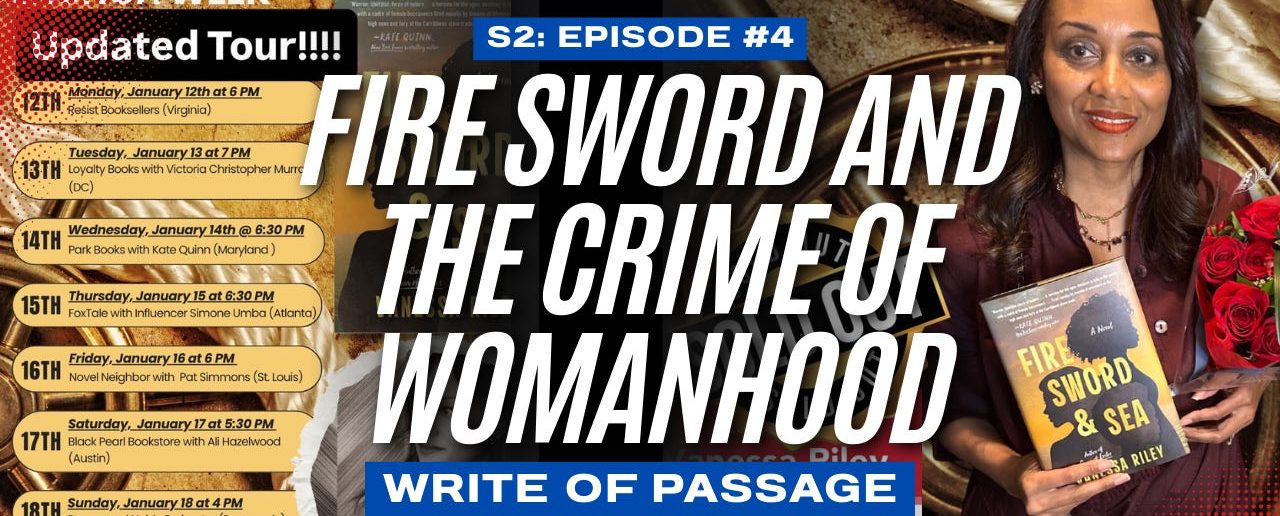
Season Two begins next week. For the most part, this new year will continue as a weekly offering—my thoughts, shaped into essays. Occasionally, I may invite a guest, someone I’m learning from, someone who stretches my thinking. But this is not an interview show. There are plenty of those already. This space remains what it has always been: a place for reflection, curiosity, and shared thought. And when something special comes along, I’ll bring it here first—to my friends.
So thank you. Truly. Thank you for tuning in every week. For commenting, sharing, downloading, and telling others about this podcast. In some dark moments this year, your presence mattered more than you know. To everyone who has paid a subscription, you have blessed me. If I don’t have your mailing address, please email it to me. I have a writing journal that I’ve designed that I want to send to you.
And finally as I close Season One, I’ll leave you with this encouragement: we all have a right of passage. But I don’t want us to sail past each other like ships in the night. I want us to sit together—to talk, to think about the bigger ideas and the higher places we might go, together.
This week’s booklist is last week’s spotlight. Books coming out in January that need a little more love:
With Love, Harlem by ReShonda Tate — This is a fictionalized version of Hazel Scott’s story.
The Seven Daughters of Dupree by Nikesha Elise Williams — A multi‑generational family epic following seven Dupree women.
Last First Kiss by Julian Winters — A second‑chance, slow‑burn romance about an Atlanta event planner.
Happy Habits for Successful Women by Valorie Burton — A practical, empowering guide that encourages women to adopt mindset and behavioral habits to become healthier, more resilient, and more aligned with their goals and values.
Behind These Walls by Yasmin Angoe — A twist‑driven psychological thriller in which a woman infiltrates a wealthy family’s mansion under false pretenses.
Murder From A to Z by V.M. Burns — A cozy‑mystery in which bookstore owner and and her sister uncover sinister dealings at a retirement village.
Consider purchasing Fire Sword and Sea from The Book Worm Bookstore or one of my partners in the fight, bookstore’s large and small who are in this with me.
Come on my readers. Let’s get everyone excited for January reads.
Show notes include a list of the books mentioned in this broadcast.
You can find my notes on Substack or on my website, VanessaRiley.com under the podcast link in the About tab.
Enjoying the vibe? Ready for Season 2? Go ahead and like this episode, share, and subscribe to Write of Passage so you never miss a moment.”
Thank you for listening. Hopefully, you’ll come again. This is Vanessa Riley.
This is a public episode. If you’d like to discuss this with other subscribers or get access to bonus episodes, visit vanessariley.substack.com/subscribe
The winter months can be rough. According to a New York Times article from a few years back, it is likely that four out of five of us won’t keep our New Year’s Resolutions through January. Forbes.com states that nine out of ten of us go about making a resolution in the wrong way, thus spelling trouble for achieving our goals in the new year. And alas, Health.com tells us that less than half of us (a mere 46%) will still be on target with our New Year’s Resolutions after the six month mark has passed.
One of my New Year’s Resolutions was to read a Regency Era novel each month in 2013. (Think “Kristy’s Regency Book Club” for one.) So with all of this gloom and doom predicted around resolutions in the first month of the year, what’s a gal to do? I’m following the advice from Forbes.com and will be looking for small lifestyle changes to add a little Regency into each day. Care to join?
Here’s how I plan to enjoy the Regency in 2013, one month at a time:
Keri Russel (Jane Hayes) and JJ Field (Mr. Henry Nobley), in Austenland (2013)
JANUARY: Austenland
Based on the book of the same title by author Shannon Hale, Austenland has been generating a lot of buzz this month at the 2013 Sundance Film Festival in Park City, Utah. While Sony Pictures Worldwide has yet to issue an official release date, publicity for the film has increased in the first month of the year. In fact, Sundance screenings of the film have completely sold out – indicating that Jane’s appeal is just as real today as it was when Pride and Prejudice was first published 200 years ago. [Austenland – Desertnews.com LINK]
FEBRUARY: The Other Kind of Romanticism
February, Valentine’s Day, and romance… they tend to all go together, right? But the romance we associate with this month isn’t the same Romanticism. The Regency Era fell in the middle of the Romanticism movement, which saw its high point from the end of the 18th century to the first part of the 19th century. The movement ushered in a renewed focus on the arts and sciences, particularly those of the natural world, and a moving away of classical (Greco-Roman) themes in art and literature. [Romanticism LINK]
MARCH: What to Read… That is the Question.
If that’s the question, then we aim to answer it here at Regency Reflections. We’ve compiled a list of current books available from our authors. And if you come back soon, we’ll have updates on upcoming releases posted throughout the year. (You’re most welcome!) Ruth AxtellLinore Rose BurkardLaurie Alice EakesSarah LaddMary MooreNaomi Rawlings
APRIL: What Did She Just Say?
So you don’t know a ha’penny from a farthing? Is a livery a stable or a piece of clothing? And just where is Grosvenor Square? Never fear. We’re here to help. Particularly if you’re new to Regency Era fiction, you might find that some assistance with the language is in order. We cordially invite you to partake of the information in the links below, so that you might brush up on your skills with the language. (After all, who wants to be accused of being a ninny or a fop when it comes to Regency terminology? [Regency Glossary, JaneAusten.org Glossary]
Photo: Wikimedia Commons
MAY: I’ll Take Season Etiquette for 100
It may sound a bit like Jeopardy, but there’s a lot to know about the Regency social season. From the ball to the proper time to call, one could certainly make a social faux pas if you’re not careful. That’s why it’s essential to know your stuff. The London Season coincided with what? Which month signaled the official start of the “season”? And low neck dresses and short sleeves were reserved for what time of day? If you want to make sure you fare well on the Marriage Mart then do your research, ladies! [The London Season – LINK, Jane Austen Centre – Regency Fashion LINK]
JUNE: Inspiration, Please
Here at Regency Reflections, we live and breathe writing good stories that our readers will love. While similar to fiction you’ve probably read before, there’s one additional component woven into an inspirational book – a story steeped in a journey with Christ. When you’re looking for a good Regency story to read by a roaring fire, we hope you find comfort in knowing that your story will be encouraging to your Christian walk as well as entertaining to your heart. [For your reading pleasure: Amazon – LINK, Barnes and Noble – LINK]
JULY: The Jane Austen Festival, Your Hometown, USA
The Jane Austen Centre at Bath is set to celebrate their annual festival in honor of the authoress this April (and in which they’ll celebrate the 200th anniversary of Pride and Prejudice). But if you don’t think you’ll make it to the UK this year, then The Jane Austen Society of North America may have a celebration you could attend a little closer to home. With over 70 regional groups across the continental US and Canada, chances are there is a chapter a stone’s throw from your back yard. [Find your local chapter here – LINK]
The Jane Austen Centre, Bath (Photo: Wikimedia Commons)
AUGUST: Happy Birthday, Georgette!
Born in this month in 1902 (d. 1974), British author Georgette Heyer is beloved by historical romance readers both for her charming characters and rich settings that are reminiscent of Miss Austen’s Regency world. But Georgette is not alone in her book writing genius! Other beloved authors of the genre: Marion Chesney (M.C. Beaton), Julia Quinn, Patricia Veryan, Dawn Lindsay and Debra Raleigh. So if you’ve not ventured far beyond Jane’s novels but you’re drawn to the genre, you might pick up a Regency romance written by one of these authors. [Georgette’s books – LINK]
SEPTEMBER: Celebrate the Empire Waist!
Now that I know what to read, how to speak, and where to go to celebrate the Regency, this gal needs a dress! There are lots of resources out there to find the right period dress – whether you’re looking to buy or to make your own. A couple of sites that celebrate Regency fashion are listed below. [Elegance of Fashion blog – LINK; Sense and Sensibility Patterns – LINK]
OCTOBER: Write It Down
Whether you are an avid reader or a would-be author, journaling is a classic way to learn more about yourself (or in this case, the Regency). Find out what other writers have essayed on the subject in the annual Jane Austen Journal. [The Jane Austen Journal – LINK]
NOVEMBER: It’s Cold. I Want a Warm Fire and a Good Movie.
Enough said, right? Here’s a list of must-see films. (Caution: This list may cause one to spend insane amounts of money on Regency entertainment. We are not responsible if your spouse questions your spending habits!) [Your fabulous link to classic romance: LINK ] DECEMBER: I’d Like to Thank the Academy…
For those of you that are fond of entertainment news, you’ll know that the start of a new year sparks excitement for the Hollywood awards season. But for writers, the new year ushers in a season of another kind, and that’s contest season. December is the perfect time to begin thinking about polishing that new manuscript, or even writing something new and submitting it for a contest. So put on your dinner dress or cravat, walk on stage and prepare to accept your award! [JASNA 2013 Essay Contest, Romance Writers of America (RWA) Contests, American Christian Fiction Writers (ACFW) Contests]
And there you have it – a full year of super-simple (but delightfully amiable) tips to incorporate your love of the Christian Regency into your daily routine. Because as we know, it’s a truth universally acknowledged that if you make New Year’s Resolutions next year, you’ll have a whole new outlook if you were able to conquer them the year before.
I found a bit of time to read this weekend. For me, that would be a Regency novel. Obvious huh. As I looked at my two-decade-old collection, I started thinking about the types of plots I really love. Three stood out: Old Lovers, Make-Me-Love-You Heroes, and Marriages of Convenience.
Old Lovers
While I enjoy the whole “find a stranger/ love a stranger” aspect of most novels, the Old Lovers: loved once, love lost, love regained, really appeals to me. I recently finished Flight of Fancy, and the richness of the history between Cassandra Bainbridge and the Earl of Whittaker makes the story. It adds a subtle tension through the whole book, causing even mundane actions like Whitaker walking away from Cassandra to contemplate banging his head against the window in frustration, sexy. I wouldn’t feel his pain, if I didn’t know how long he’s loved her and his confusion of how to win her back. I wouldn’t sigh as I see Cassandra noticing Whittaker leaning against the window and noting he’s not gangly any more but well-set, all man now. Hubba Hubba.
And I’ll say it. You can’t get away with “Lessman” like passion starting on page 1 with strangers, unless of course, this is a bodice ripper Regency, but we don’t write that here. 🙂
On my radar to read, Mary Moore’s Beauty in Disguise. Seems that old lovers, Lady Katryn and Lord Dalton have a story to tell in the woods.
The Make-Me-Love-You Hero
What is a make-me-love you hero? This is an intelligent swarthy hero with a smidge of alpha-male arrogance. I know what you’re saying. “Arrogance, really Vanessa. I don’t want to read about a stuck-up hero. ”
Let me explain. Yes, a touch of arrogance is a requirement. It causes him to be deluded into believing he alone can save the heroine from all her woes. This adds to his fall or black moment. It changes him forever. It will make his “somewhat loose bond to God” stronger, more personal, more real.
Oh, he must also be smothered in a big dollop of humor, particularly, self-deprecating humor. It’s a rare combination like a handcrafted tea, but when you find him, you’ll drink him in, reading him over and over again.
And it goes without saying, he must be romantic. I need him to whisk me off my feet and carry me to safety after he bests the footpads. He should whisper sweet Latin or poetry or verses penned by Solomon in my ear to soothe my nerves. Then at the right moment, his rough knuckles will traverse my jaw, tipping my chin to the right angle to kiss me ’til I nearly faint. Or at least he’d want to but his gentlemanly manners prevented it.
Who are these men? You’ve met them: Mr. Knightly (though he needs more humor) of Emma, Mr. Darcy (after he falls for Elizabeth) of Pride and Prejudice, Dominick Cherrett (from start to finish) of Lady in the Mist, Adam Drake of A Proper Marriage(Zebra-Traditional Regency), and Justain Delveaux of Madeline’s Protector (Ok, you’ll get to meet him in April). There are so many more that I can’t do this post justice.
Sigh, sorry I was in my happy place thinking of these heroes, back to Regency Reflections. P.S. please comment with more Make-Me-Love-You Regency heroes. I need to add to my bucket list.
On my Radar: Major Gerrit Hawkes of the Rogue’s Redemption. I hear he’s a naughty guy turned good by the love of a good woman and a good God.
Marriage of Convenience
As I said before finding love with a stranger can be stirring. Nonetheless, having to marry said stranger before you knew you loved him is positively fascinating. The idea of marrying a stranger is probably making you cringe. This complete loss of control in a matter of the heart would lead to many hours of prayer and/or counseling. Yet, did you know that the average divorce rate of arranged marriages is 6%1? Did you know the average divorce rate amongst Christians (those who regularly attend church) is 38%, 60% for Christians who don’t attend church regularly 2. So let’s not scoff at these marriages based upon factors other than love.
Let Me Explain What a (Regency) Marriage of Convenience is and What it is Not.
A marriage of convenience is a real marriage, not a fake one. It must be officiated like every other marriage, with licenses, banns, etc. In Regency times, these were marriages for life. There is no “let’s get married” for a few years and then divorce. As a matter of fact, there is practically no divorce. Unless the husband continually cheated with the wife’s sister to the point the wife could not forgive him and was constantly reminded of the infidelity, Parliament saw no reason to grant a divorce. Thus, divorces were extremely rare in England since it had to be sanctioned by Parliament.
There was such a thing as a Church Divorce. This was not a legal divorce but a separation ordained by the church. This did not dissolve the marriage or allow someone to marry another. It was just a civilized way to separate. Women needed to be particularly careful in this situation. The husband could keep custody of the children, as it was his right to decide where the minors would live. He could prevent her from ever seeing them. Under a Church Divorce, the husband could do the bare minimum to provide for the wife. Again not a good situation for the wife.
A marriage of convenience did not have to involve a compromised party. It might just be convenient. I truly love, when a hero accidentally or purposely compromises the heroine and is now forced to save her (and his) honor(s) and must marry the heroine. Yet, this is just one contrivance. They may decide to marry to fulfill the requirements for an inheritance, to join lands, to protect the heroine, a parent’s dying wish, or an overly complex and contrived plot. Many reasons, just not for love.
A marriage of convenience does not mean no nookie. This was a real marriage with a marriage bed. As Hebrews 13:4 says, “The Marriage is honourable in all, and the bed undefiled.” So if the parties are inclined or they needed an heir…. Well, you get the picture.
Alas, most of my favorite Marriage of Convenience stories are found in the old traditional Regencies (Inspy’s we need more of these): The earl and countess of Sanborn in the Perfect Mistress (Bantam), the earl and countess Faulconer of A Convenient Marriage (Zebra), the earl and countess of Slenford of The Earl’s Mistaken Bride (Love Inspired).
On my radar, Marriage of Inconvenience by Cheryl Bolen. Is the practical marriage of the Earl and Countess of Ansley doomed or just beginning? I’m going to have to find out.
References
UNICEF, Human Rights Council, ABC News, 8/12/2012
Bradley R.E. Wright, Christians Are Hate-Filled Hypocrites …and Other Lies You’ve Been Told, (Minneapolis, MN: Bethany House, 2010), p. 133.
Laurie Alice here: While working on my next Regency, (Zondervan Books, 2014), I ran into a problem—I needed to entertain a houseguest who is in mourning and who is also. . . We’ll be kind and call her distraught rather than whiny. Since I didn’t want them to play card games commonly associated with gambling, such as silver loo or whist, and this lady is not bright enough to play chess, I went to the well of information that is The Beau Monde ladies, the Regency special interest chapter of Romance Writers of America. As usual, they gave me enough information to keep my guest entertained for weeks; therefore, I thought I would share a few of them with you all.
Let’s start with Spillikins.
From Wikipedia (Jeu de mikado photo)
This is a game that is still played today. Sticks of varying shapes and sizes are held upright, then allowed to fall into a random pile. The object of the game is to collect as many sticks as you can without disturbing any of the other sticks. I remember playing something similar to this as a child called “Ker plunk”—or something like that.
Another game that reminds me a little of a favorite childhood game was, A Journey Through Europe, or The Play of Geography. The idea was a race through Europe, reaching the goal first. Players moved their game pieces along a map of Europe according to the toss of a dice. Sound a little like The Game of Life?
Other games included first having to put together what we would now call a jigsaw puzzle which resulted in a board game of some kind. These games—and others—were stored in slip cases for easy storage or taking on long road trips.
So now I need to figure out how I can get the heroine and hero playing one of these games. Or maybe that will wait for another book in this series. All I know is that knowing more about the games of the time makes for far more interesting evenings in the country houses in which I like to place my characters, than the standards of playing cards, chess, or music.
Winter is a season for hunkering down with a good book … at least where I live, in Wisconsin. Having discovered the joys of a good Regency romance, I want to share the joy I have found. Promoting the genre can be done in some simple ways.
1. When having a book chat with friends who are also inveterate readers, be sure to give them a few titles of the very best Regencies you can think of. If they are on the lookout for a good read (and who isn’t?), perhaps they will take your suggestion and thereby find a new love.
2. Mention to your friends who are Christians, that many Regencies are relatively clean and educational. Guide them to some reliable non-smutty titles or authors.
3. Share this blog on your facebook page. You never know whose curiosity will be piqued. They may initially check it out to see what their fb friend is into, and then check out the genre themselves.
4. Post on Facebook about the latest Regency you are reading.
Do you have an idea or two to share? Favorite Regency romances to recommend? Also, would love to read comments about success introducing Regency fiction to others.
Walter Mosley said it a month ago on a Zoom for The Center for Black Literature’s
Summer Series. And in his MasterClass. I say it all the time. To get your novel finished, you need to have your butt in a chair and write every day. Whom are you going to believe—us or your lying unfinished manuscript?
Putting Yourself and Your Words First
When you’ve written a lot of books, people want to know how you do it. They ask about plotting techniques. Are you a pantser? A planster? Do you bounce between scenes or write straight through? What craft books do you recommend? Are you a morning writer or an evening writer?
All valid questions. I enjoy talking about the work.
But the advice I give that seems to generate the most consternation is this: write every day.
“Now, Vanessa. When you say every day, do you mean every day? Don’t you take Sundays off? Don’t you go on vacation? What about Christmas? Surely you take off for Christmas.”
Some of you are already looking at your work calendars, making me your HR rep trying to get me to approve your days off.
Here’s what I mean by writing every day: take those words as literally as you need to take them to establish, in your own mind and spirit, that your writing matters.
You need to believe that writing deserves a respected place in your routine.
Your words don’t always have to wait until another month of research. Until you read another craft book. It doesn’t need to wait for a new, different notebook. You shouldn’t have to wait for a weekend when nobody needs anything from you.
If you’ve allowed your writing life to build up excuses, forgive yourself. Begin anew. But let’s begin with vigor and consistency.
But Write Every Day?
Yes, there are days when—clutch the pearls—I don’t work on a manuscript. But I’ve written something, probably an essay for a podcast. Hint, hint. Or a little reflection for social media. Or something in my journal.
Does that finish my novel?
No. And I have to be honest with myself about that. A beautifully written caption will not resolve the emotional conflict or lack of tension I left my characters in three chapters ago.
But every bit of writing keeps my writing muscles taut. Stringing coherent words together are like calisthenics. Arranging sentences are yogo. Any attempt at trying to get what’s in my head onto a page is a useful one. For me, daily writing makes returning to the manuscript easier.
I’m telling you that writing is a muscle. And I want mine limber and strong, ready to work when I need it.
Have you ever joined a gym or bought exercise equipment?
In the beginning, there’s so much excitement. You have plans. You have goals. You have sneakers.
Naturally, the sneakers need to be cute.
Maybe you buy athletic wear. A matching set. Something that announces you are a person who intends to take this exercise business seriously.
Then you do the workout.
And the next morning, your legs have questions. Parts of your body angrily ask what are you doing.
Eventually, the excitement of buying the equipment and icy heat lotion wear off, and you have to decide whether you’re going to keep at this.
Writing asks that question, too.
You bought the notebook. You downloaded the software. You found the perfect pen, the best journal. But, will you return to the work when the first burst of excitement wears off? How about when a scene is difficult? What about when you see words on a page and none of it comes out bearing any resemblance to the beautiful ones you imagined?
That’s where I believe many stop, when they need their muscles to push through.
This past week, I was at the Writing Sisters Summit, hosted by Nina Foxx, in Taos, New Mexico.
The air was fresh. The mountains were magnificent. The dirt roads were scary.
I want to be clear: I appreciated the scenery. I have lingering questions about the roads.
But the sisterhood at the treat was amazing.
Wanda Morris, Pamela Samuels Young, Sheila Williams, and I joined the faculty, bringing our experiences to a vibrant group of women writing across genres and at different stages of their careers. Some were working toward their first books. Others had been at this for years.
We had time to talk about the writing and industry challenges. To ask questions and stay for the answers. To hear someone describe a struggle and recognize a little of our own.
And yes, I got up early. I know. Another revelation.
I walked the trails outside, feeling the crisp morning air on my cheeks. There was a slight breeze that smelled of sage. I took pictures, lots of pictures. I want to remember and treasure this experience.
Then I switched from my camera to my Notes app and dictated thoughts about the project I’m working on.
A phrase. A possibility. Something I was beginning to understand about the next new book.
That counts, boys and girls.
Was it the most productive writing session of my life? Word count-wise, no.
But I was able to work out and articulate the premise of my next book. Something I’d been reaching for became clear. I captured it and brought it home.
That is useful work. That’s words in a Note.
My notes and journals are not a polished exhibit of perfect syntax and amazing grammar. There can be pages of disconnected phrases. Somethings will only make sense only to me. My daughter has license to destroy certain documents when I’m gone so your vision of me and being literate will be preserved.
I’m being humorous, but I want you to understand that my daily writing isn’t perfect writing, sometimes it’s not good writing.
A scene may begin as a few lines of dialogue. A character’s motivation may show up as something different than my outline. You may write a paragraph and realize the only sentence you need is the last one. It’s okay to write the paragraph to find it. That why editing and revision are powerful.
But every word and thought dump in my daily writing moves me closer to a completed project.
I think we struggle to write because we want prove that our writing is brilliant, and we’re setting up that moment to share with someone. That is too much pressure. And it’s unfair to you and your words.
Daily writing for me, has taken away that pressure. I’m asking for words. Brilliance will come with editing and revision. And truthfully, the word the end needs to come before I start editing.
Let me take a moment to say, sign up for word time. Find a writing retreat. If you can make it work, take the mini vacation. Plan the staycation. Find a local hotel with good room service—or reliable delivery—and give yourself some time with your words.
It’s OK to go alone or together with other writers. You can start today pencilling in time on your calendar.
The Writing Sisters Summit
There was something deeply nourishing about being in Taos with women who had made room for their words. We stepped away from our usual responsibilities long enough to hear ourselves think.
I came away feeling connected to the work and to the people doing it.
I hope the women who joined us carried that feeling home, along with the things they learned and the pages they began.
The retreat deepened my love for making room in my ordinary life for writing. I can’t wait for another mountain view or vineyard or rushing river or ocean.
Today, I’m back in my office, answering emails, looking at my obligations. There definitely a stack of laundry to do.
And there is the book, that I’m closer to finishing than I was yesterday, because my dedicated writing does this.
For a very long time, my writing time was between 10 PM and 2 AM. I worked a full-time engineering job, and still am a full-time wife and mother. So every day doesn’t mean hours of writing necessarily.
Every day doesn’t look the same. Some days I have the same hours. Some days I have small pockets of time. I use what I have.
Journaling and essays keep me writing, but eventually I have to return to the people waiting inside a manuscript. So the other non-book writing can’t take over. But I’ll take words any way I can get them on to the page.
Consider your writing life for a moment.
Are you giving it regular attention? Are you allowing it to lie to you. Are your writing muscles feeble from lack of exercise? Are you asking them to perform whenever you have a little free time and coming up with blank pages?
Maybe after this podcast spend a few minutes stringing together words or add a few thoughts about your latest idea to the page.
If I write 50-150 words a day, consistently, I can have a novella or short novel done in a year.
It’s doable. Take a moment and
work through one exchange between two characters. Maybe you dictate the thought that came to you on a walk. Then during tomorrow’s writing time develop it.
Then commit to coming back to the project the next day. Habits form by doing—not wishing and hoping.
Doing needs to happen.
Even when it’s awkward.
Even when I’m tired.
Even when there’s something on the TV…
Even when there’s a food fight in Book Social Media
In Walter Mosley’s MasterClass he say his Rule number one: Write every day. It’s nonnegotiable.
I agree.
Your unfinished manuscript agrees too. The chores and regular life say—“Naaaw. Writing can wait.”
Who are you going to believe, your word count or procrastination?
This week’s booklist includes:
* Hanging and Burning — Walter Mosley. A dying gangster hires investigator Joe King Oliver to find his missing granddaughter, drawing him into a family history of violence and buried secrets (Releases Oct. 20, 2026).
* This Never Happens Here — Wanda M. Morris. Two detectives investigate a disturbing pattern of murdered parents and missing children in Atlanta’s wealthy suburbs (Feb. 16, 2027).
* Sounds Like Trouble — Pamela Samuels Young and Dwayne Alexander Smith. Two private investigators juggle their simmering attraction and clashing personalities while tracking down a mysterious package for dangerous mobsters.
* Daughters of the Wind — Sheila Williams. A corporate executive who secretly commands the winds must gather powerful women across time to confront a looming climate catastrophe (Dec. 1, 2026).
* Island Secrets: A Queens of Kiawah Story — Nina Foxx. On South Carolina’s exclusive Kiawah Island, a cozy mystery blends murder, romance, and closely guarded secrets.
* Murder in St. James’s Park — Vanessa Riley. When Lady Worthing discovers her husband murdered, her search for his killer exposes secrets that challenge her judgment and shake her family.
This week’s indie bookstore spotlight is Reparations Club, a Black-owned, woman-owned bookstore and creative space in Los Angeles, California. Purchasing through this episode’s Bookshop.org links supports Reparations Club. If you’re ever in Los Angeles, stop by, browse the shelves, and give them some book love! In fact, check out my other partners in the fight, bookstores large and small, who are in the trenches fighting for literacy.
Remember to check my Resources Center on my website for my writing downloads. Lots of free and low-cost tools that I’ve made available to help you on your writing journey.
If this podcast sparked something in you, show some love—hit like, share the episode, and subscribe to Write of Passage!
You can find my notes on Substack or on my website, VanessaRiley.com, under the podcast link in the About tab.
If this sparked something in you, show some love—hit like, share the episode, and subscribe to Write of Passage!
Thank you for being here.
I want you to come again. This is Vanessa Riley.
This is a public episode. If you’d like to discuss this with other subscribers or get access to bonus episodes, visit vanessariley.substack.com/subscribe
Depending on what part of the country you live in (if you live in the United States) your winter is either much colder than normal or nearly non-existent – looking much more like spring than winter. We have a long way to go before the weather officially turns the corner and anything could happen in the coming months – including lots of snow and dropping temperatures.
So how do your Regency Reflections authors handle the winter blues?
Ruth Axtell:
Embrace them.
With temps dipping into the single digits these last couple of weeks in Maine, and getting lots of snow, I just tell myself it’s good writing weather, since there is little temptation to go outside. I feel like I’m hibernating, getting a manuscript done and now editing.
Naomi Rawlings:
Photo Credit: Wikimedia Commons
I agree with Ruth. Embrace winter rather than dread it. First, snowy days make for excellent writing and putz-around-the-house days. There’s something wonderfully nostalgic to curling up in front of the fire with a book and a mug of hot chocolate while snow falls outside. And then there’s all the outside things you can do. Rent a snowmobile for a day trip, go skating, sledding, downhill skiing, cross country skiing, show shoeing, or ice fishing. (Fish caught through ice is way better than fish caught when the weather is warm. I have no idea why, but I swear it’s true.)
I really think there are two ways to beat the Winter Blues. 1.) Take a break and be thankful for the slower pace that snowy days offer, or 2.) Get courageous. Bundle up, go outside, and try a new winter sport. I live on the southern shore of Lake Superior, where we get 150-200 inches of snow per year, our winters run six months long, and our trees don’t get leaves until June. People who live in this area well understand that winter doesn’t have to be boring. It can be just as fun as summer, sometimes even more so.
Laurie Alice Eakes
Um, I live in Texas–we don’t have winter blues. They consider this 40s-50s weather we’ve been having excessively cold for January, but I think it’s heavenly.
Photo Credit: Wikimedia Commons
Kristy Cambron
I live in an area of the country where we have pretty defined weather for each season, so I actually enjoy winter! It just means that before we know it, the sunnier days of spring will be on the way. Winter is also a fantastic season for writers. I haven’t met one yet that wouldn’t love the extra time to snuggle in a warm house as the snow falls and plot that next novel – with a cup of steaming hot chocolate, of course!
Kristi Ann Hunter
I tend to ignore them, I suppose. With children in school and a regular calendar full of church activities, there would have to be a fairly significant amount of fresh snow/ice to make me adjust my schedule.
When that does happen, we of course go play in it. Then we thaw out in front of a movie, huddled together under blankets. There’s something about the forced weather break that makes us want to be together as a family. It feels like a stolen moment.
Photo Credit: Wikimedia Commons
Susan Karsten
During the winter, I drink more hot liquids, such as tea, coffee, and hot chocolate than I do in the summer. I still jog/run, but often veer out into the street when people haven’t shoveled their sidewalks. This is the time of year my family attends more concerts, plays, conferences and the like, as opposed to summer, when everything’s about “The Lake”.
For the most part, Great Britain is a soggy place. Surrounded by water, rain is almost a way of life there. But what about snow; now that is an entirely different matter! Snow is much more unlikely even though many of my favorite Regencies are set in a country house at Christmas smothered in snow, giving the hero and heroine plenty of time to flirt, argue, ignore and fall in love with each other.
I am hoping that one of my next stories might be a Christmas Regency, so I decided to research winter apparel. I specifically remember that in these lovely stories, when they ventured out in the snow to get the Yule log, invariably we are told that the ladies rushed to get their pattens. I never really thought much about pattens, assuming it was a sort of a rubber overshoe that would fit over a sturdy walking boot to protect it from ruination, much like our mothers used to wear. Wow, was I wrong!
These my friends are pattens; and they weren’t for snow at all!
This pair is made of flat metal rings which made contact with the ground and the ring was attached to a metal plate nailed into the wooden sole. Can you imagine trying to keep your balance while wearing such things?
And when worn on stone floors they made such loud clatter that churches made ladies remove them when they entered. Many churches banned them altogether!
Jane Austen herself wrote of the “ceaseless clink of pattens” when referring to life in Bath; as we know being a perpetually rainy and damp part of England.
They were clumsy platforms that raised the shoe a few inches from the ground to protect the hem of a gown and they were used by men as well as women, in the country on muddy, rutted lanes and in London when walking on horse infested pavement.
Pattens date back to the 14th century. Only the rich would have been able to afford these porcelain china pattens worn to protect their long and ornate robes.
These are huge pattens worn by Turkish women in 1738.
In the 17th century when ladies shoes were commonly made with an upper of figured silk or brocade that almost any venture out necessitated the use of this patten to protect the shoe as well as the hem of the gown. This is how the shoes fit into them and the metal ring would have been attached to the wooden platform under the shoe.
By the 18th and 19th centuries, men’s shoes had thicker soles, hemlines rose, and as roadways and transportation improved pattens were abandoned by the ladies as well and were worn only by the working class men and women as they went about their duties.
In “A Memoir of Jane Austen,” James Edward Austen Leigh wrote about his aunts Cassandra and Jane:
The other peculiarity was that when the roads were dirty the sisters took long walks in pattens. This defense against wet and dirt is now seldom seen. The few that remain are banished from good society and employed only in menial work…
So, the next time you read about the ladies donning their pattens to venture out of doors, I dare you not to smile as you picture it!
The Woodlanders
Arrived at the entrance to a long flat lane, which had taken the spirit out of many a pedestrian in times when, with the majority, to travel meant to walk, he saw before him the trim figure of a young woman in pattens, journeying with that steadfast concentration which means purpose and not pleasure. He was soon near enough to see that she was Marty South. Click, click, click went the pattens; and she did not turn her head.
She had, however, become aware before this that the driver of the approaching gig was Giles. She had shrunk from being overtaken by him thus; but as it was inevitable, she had braced herself up for his inspection by closing her lips so as to make her mouth quite unemotional, and by throwing an additional firmness into her tread.
“Why do you wear pattens, Marty? The turnpike is clean enough, although the lanes are muddy.”
“They save my boots.”
“But twelve miles in pattens–’twill twist your feet off. Come, get up and ride with me.”
She hesitated, removed her pattens, knocked the gravel out of them against the wheel, and mounted in front of the nodding specimen apple-tree….
Thomas Hardy
She lost her pattens in the muck
& Roger in his mind
Considered her misfortune luck
To show her he was kind
He over hitops fetched it out
& cleaned it for her foot…
From the Middle Period Poems of John Clare (1820s)
 We are so pleased to once more welcome Jillian Kent to Regency Reflections. Her latest release, Mystery of the Heart, is the last of the Ravensmoore Chronicles books. The love story of these two strong-willed individuals is wrapped in adventure involving a foreign religion, an expensive artifact, and Jillian’s vast knowledge and love of the historic practice of medicine.
 Both Mystery of the Heart and your previous book Chameleon contain a great deal about period medicine. What sort of struggles did you face writing about two hundred year medical practices in such a way that modern day readers would be able to accept them?


 4. Post on Facebook about the latest Regency you are reading.




 They were clumsy platforms that raised the shoe a few inches from the ground to protect the hem of a gown and they were used by men as well as women, in the country on muddy, rutted lanes and in London when walking on horse infested pavement.
 Pattens date back to the 14th century. Only the rich would have been able to afford these porcelain china pattens worn to protect their long and ornate robes.
 These are huge pattens worn by Turkish women in 1738.
 By the 18th and 19th centuries, men’s shoes had thicker soles, hemlines rose, and as roadways and transportation improved pattens were abandoned by the ladies as well and were worn only by the working class men and women as they went about their duties.