For me, the most hectic—and refreshing—moment is when one book is finished and turned in. My mind doesn’t like to be idle, so I find things to do. I read. I explore. I bake. And eventually, I reach that moment when my brain says, “The heck with this. Let’s write. The question becomes, what do I write.”
Finding the Idea You Have to Write
Getting started is one of the hardest things a writer has to do.
Where do you begin when you want to write the next great American novel? My first piece of advice is simple: take your expectations down.
That doesn’t mean you shouldn’t dream big. Dream as big as you want. But no great novel can come from you if you aren’t committed to writing the novel in the first place.
Writing is one of those endeavors where best intentions, wishes, and all the things you would’ve, should’ve, could’ve written don’t count for much. At some point, you have to show up and put words on paper. That’s how you win the game—or, more accurately, how you put yourself in the game.
Before there are chapters, however, there is an idea.
And an idea doesn’t have to arrive fully formed.
Where Story Ideas Come From
For me, book ideas tend to come in three ways: a person, a circumstance, or a fascination that won’t let me go.
Because I write historical fiction, I may happen upon an unusual fact or discover a person in history who immediately piques my interest. Something about that person catches hold of me, and I need to know more.
That happened with Queen of Exiles. While researching and writing Sister Mother Warrior, I encountered the story of Marie-Louise Coidavid Christophe, wife of Henri Christophe. Christophe rose as a soldier in the Haitian Revolution to the liberator Dessalines’s right hand man and then became the king of Haiti, which made Marie-Louise its queen. But what fascinated me was how this simple hotelier’s daughter grew to handle herself on the world stage through building a kingdom in Haiti, then in exile arriving to Europe.
I wanted to know her.
Who was this woman? What happened to her? What did she experience? How did someone live through such extraordinary transformations?
That curiosity became a story.
Sometimes, though, it isn’t a person. It’s a circumstance.
My Lady Worthing Mysteries grew partly from my fascination with the complicated political and social world surrounding abolition, race, class, and freedom in Regency England. But another piece came from something much more personal: watching Murder, She Wrote with my mother. Those seemingly unrelated things could live together in my imagination—an amateur sleuth stumbling across murders and a historical world filled with political intrigue—catnip.
Thus a circumstance became a playground for story.
And sometimes an idea begins with nothing more complicated than something you can’t stop thinking about.
A question. An image. An experience. Something strange you read. Something that happened to you. Something you wish had happened. Something that makes you angry, delighted, curious, or confused.
Pay attention to the thoughts that keep coming back.
They may be trying to tell you something.
The StoryMetric™ Idea Assessment: Start With the Bubble
This is why I created the StoryMetric™ Idea Assessment process. That’s a lot of fancy words for the way. Vanessa’s brain works and how she teaches story craft.
As an engineer, I love spreadsheets and forms. But I love love, magical forms that help build to something. So I built a bubble form where I throw ideas into them, play with those ideas, question them, and gradually refine them until I find the story I know I have to tell.
At the beginning, I don’t want perfection. I want possibility.
The Idea Bubble is deliberately simple. Give yourself ten minutes and fill the bubbles. One way to get moving is to use a basic story pattern:
Subject + Verb + Object + Conflict
A girl wants to become an astronaut, but she’s afraid of heights.
Is that your novel? Maybe. Maybe not.
That’s not the point.
The point is that you’ve made something where nothing existed before.
Fill another bubble. And another.
Don’t edit yourself, not yet. Don’t decide whether an idea is literary enough, commercial enough, original enough, or important enough. Generate first. Assessment comes later.
Then take the ideas that create a spark and begin asking questions.
What is the situation or circumstance?
What fascinates me about it?
What question keeps returning?
What connection do I have to this idea—something I’ve lived, witnessed, inherited, studied, or wondered about?
Now we’re moving from having an idea to discovering whether there might be a story inside it.
Give Yourself Permission to Want What You Want
The next question is one writers sometimes don’t want to answer:
Why do I want to write this?
Maybe you’ve never heard of this subject before and you’re fascinated.
Maybe you want to explore something you don’t understand.
Maybe there’s something you want to say that might encourage another person.
Maybe this is personal.
Maybe you simply want to write.
Or let’s get mercenary: maybe you think the idea will sell.
That’s allowed, too.
None of these motivations is inherently wrong.
Some writing may be primarily for you. Some may be intended for a particular community of readers. Some may be a gift you want to put into the world. Some may be unabashedly commercial. Some may begin as one of these and become another.
I’m Vanessa Riley, and I’m giving you permission to write about anything you absolutely want.
You don’t know how far an idea will reach when you’re standing at the beginning.
And there are no stupid ideas.
There are no trivial ideas.
If you look at an idea and think, That’s stupid, my response is that you may simply not have developed it enough yet.
Question it before you discard it.
Turn it around. Make it more specific. Find the conflict. Change the circumstances. Ask what fascinates you about it. Ask why it keeps coming back.
The important thing at this stage is clarity—not justification.
What Kind of Story Might This Be
Once an idea survives that first examination, I start asking another question:
What kind of story could this become?
Literary Fiction? Historical Fiction? Romance? Love Story? Mystery? Thriller? Horror? Commercial Fiction? Memoir? Biographical Fiction? Science Fiction? Space Opera? Fantasy? Saga? Women’s Fiction?
Or maybe your answer is:
I don’t know yet.
That’s a perfectly legitimate answer.
You’re still in a nebulous phase. You aren’t signing a contract with a genre. You’re forming a hypothesis.
But having some idea of where you’re going can begin to tell you what you need to learn.
Genre starts shaping your research. It gives you craft questions. It helps you identify the books you should be reading. It begins to reveal what kind of experience a future reader might expect.
So choose a direction without treating it as a permanent label.
Then test it.
Genre Is Also a Promise
This is where the I shift from What do I want to write? to What experience am I preparing to give a reader?
Genre creates expectations.
A reader who picks up a Mystery has expectations that differ from someone choosing a Romance. A reader selecting Horror is looking for a different emotional experience from a reader choosing Women’s Fiction. Those genres may overlap. Writers may bend conventions. Books may be hybrids.
But readers still bring expectations with them.
That isn’t a limitation. It’s information.
Think about pacing. Character. Conflict. Worldbuilding. Emotional experience. Plot and structure. Ending and resolution. Tone. And of course Genre conventions.
What does a reader who loves this kind of story anticipate in each of those areas?
The fun of writing is knowing the rules and carefully breaking them. You never blindly obey every convention, but you should fulfill expectations, maybe bend them, combine them, delay them, and sometimes give the unexpected.
But you should know the rules and expectations.
Find Your Story Neighbors
The next question I ask is:
What stories live near my story?
I call these Story Neighbors.
A good writer is a reader.
Think about the books you love and the books that resemble some aspect of the story you’re considering. A Story Neighbor doesn’t have to contain your exact plot. It may share your genre, audience, premise, setting, character type, emotional experience, tone, structure, or reader promise.
Then go back and read those books like a writer.
Don’t merely ask whether you’re enjoying them.
Study them. I had a lovely conversation with an author yesterday about the lineal movements within Fire Sword and Sea. Those in between times of the twilight acts really stuck with her and she wanted to know why I chose those moments to open Jacquotte Delahaye’s journey.
That’s inside baseball talk for writers. You should be looking at how quickly the story moves? How are the characters introduced and developed? What creates conflict? How much worldbuilding does the author provide? What emotional experience does the book deliver? How is the plot structured? What happens at the ending? What’s the tone? Which genre conventions appear again and again?
Most importantly:
What might a reader of that book expect when they pick up mine?
You’re learning the neighborhood before you build your house.
An Idea Doesn’t Have to Become a Book
Shocking but true. This may be the most freeing part of the entire process.
After you’ve bubbled and questioned and researched and read and considered genre and reader expectations, you’re allowed to decide:
Not this one. Not now.
My process isn’t designed to force every idea into becoming a novel.
It’s designed to help to help me write that next important book. That means a lot of ideas go into a file cabinet or a waste can.
Sometimes when I go through this process ideas bubble to the top and I have enough direction to begin the story.
Sometimes I need more research before I decide a bubble’s fate.
Sometime the bubble pops under its own weight. Because there’s just not enough there.
All of this deciding is part of the progress.
Never give up too quickly, but don’t waste time on an idea that’s going no where or is not the right time.
Remember the next great American novel doesn’t begin as the next great American novel.
It begins with somebody showing up.
It begins with curiosity.
It begins with a bubble.
It begins with words on a page.
That’s how you put yourself in the game.
I’ve just walked you through my STORYMETRIC™ Story Starter / idea assessment process. Because you guys are my audience, I’m giving you a link to download the free PDF for this concept. It’s a fillable PDF. It’s printable and it will help you decide on what’s your next great American novel will be.
Through this last quarter of 2026, I’m going to be teaching, so buckle up, subscribe, stay tuned, and let’s write together.
This week’s books include:
Romance — Last First Kiss by Julian Winters: An event planner is forced back into the orbit of Jamie, the person who broke his heart, giving the two a second chance at both love and self-discovery while planning a high-profile wedding.
Horror — Mazywood by Tananarive Due: Decades after a celebrated Black actress’s death, her filmmaker grandson visits her secluded California home and confronts the monstrous legacy of the choices she made to survive old Hollywood.
Women’s/Commercial Fiction — The Me I Used to Be by Kristan Higgins: Twenty-five years after a tragedy shattered their friendship, four former best friends reunite for their high school reunion and confront the secrets, regrets, and unexpected lives that have shaped who they’ve become.
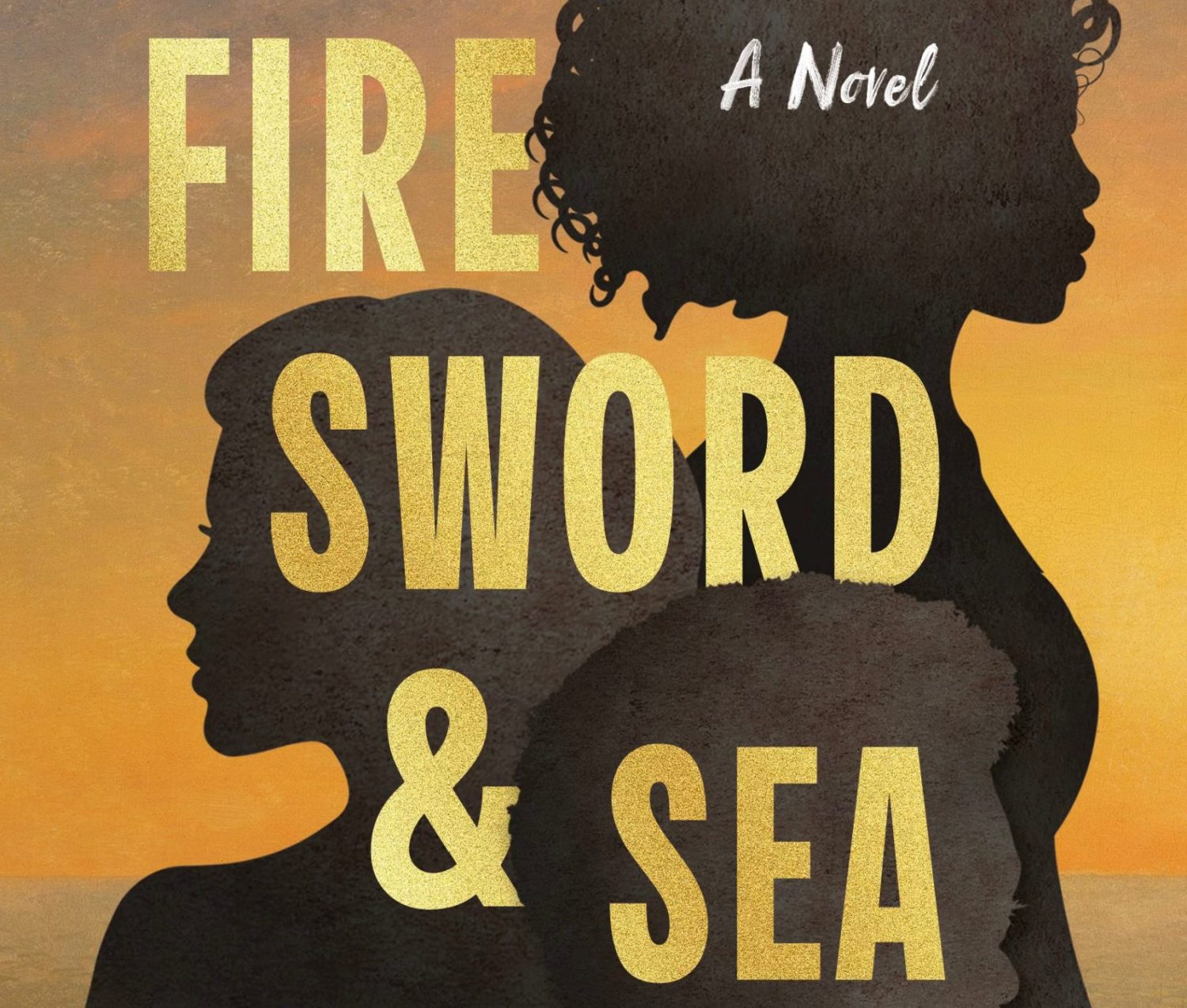
Historical Fiction — Fire Sword and Sea by Vanessa Riley: In the seventeenth-century Caribbean, Jacquotte Delahaye defies the limits placed on women to become a pirate captain and ultimately turns from the pursuit of riches toward a fight for freedom and liberation.
And Loyalty Books is my Indie of the week. Check them out for these and my books.
You can also try one of my partners in the fight, bookstores large and small, who are in the trenches with me.
You can find my notes on Substack or on my website, VanessaRiley.com, under the podcast link in the About tab.
Hey. Let’s keep rising and creating together. I need you. That’s the truth. Like, share, subscribe, and stay connected to Write of Passage.
Thank you for being here.
I want you to come again. This is Vanessa Riley.
This is a public episode. If you’d like to discuss this with other subscribers or get access to bonus episodes, visit vanessariley.substack.com/subscribe
