I’m excited to introduce a new Regency novel today. It’s entitled Moonlight Masqueradeand written by Regency Reflection’s own Ruth Axtell.
To celebrate Moonlight Masquerade, we’re running a special week-long contest. Starting today through next Friday, March 22, we’ll feature Regency quiz questions at the end of each post. To enter the contest, you’ll need to correctly answer the questions in the comment section below. For every correct answer, your name will be added into the drawing for a $25 Amazon gift card . There will be five questions in all, which means your name can be entered up to five times (if you get all five questions right). The deadline to answer ALL CONTEST QUESTIONS will be Saturday, March 23 at midnight.
Before we get to today’s quiz question, let me tell you about the story.
Lady Celine Wexham seems the model British subject. French by birth but enjoying life in 1813 as a widowed English countess, she is in the unique position of being able to help those in need–or to spy for the notorious Napoleon Bonaparte. When Rees Phillips of the British Foreign Office is sent to pose as the countess’s butler and discover where her true loyalties lie, he is confident he will uncover the truth. But the longer he is in her fashionable townhouse in London’s West End, the more his staunch loyalty to the Crown begins to waver as he falls under Lady Wexham’s spell. Will he find the proof he needs? And if she is a spy after all, will he do the right thing?
Moonlight Masquerade has garnered some excellent reviews from both authors and reviewers alike:
“All the elements of suspenseful romance and clandestine spying encounters twist through Ruth Axtell’s latest page-turner set in Regency London.” Ruth Leubecker, Machias Valley News Observer.
“Take a French emigre who is the widow of British nobility and add in a British foreign office employee who is posing as her butler and you have a recipe for a book filled with tension. Add in a dash of spying, a pinch of counter-espionage, and a dollop of intrigue stirred with a generous helping of interest in each other and it created a recipe for a book that drew me happily to its pages.” author Cara Putman
“When danger comes looking for Lady Céline what will Rees do? Will her charms blind him to who she really is so that he betrays the crown or will he unmask her to the world? Moonlight Masquerade is an interesting look at the war between Britian and Napoleonic France and the various parties with an interest in the outcome. If you like court intrigue, the Regency era, and subterfuge you will love Moonlight Masquerade!” M. Myhren-Bennett, Blooming with Books
I’m personally reading this story now, and I absolutely love the French spy angle. It’s neat to see England through the eyes of a French woman and compare the different cultures. And then there’s the whole spy question. Is Celine a spy, or isn’t she? I’m looking forward to finishing the novel, and I think anyone interested in the Regency Era will find this spy twist entrancing.
Today’s Question: The summer of 1814 was known as the victory summer in Britain because the war with France was over. But in 1815 they were mobilizing troops once again. Why?
a) Napoleon had escaped from Elba. b) Napoleon had allied himself with Russia. c) Napoleon had escaped from St. Helena. d) Napoleon had escaped to America.
Inspired by Kristi’s post on wool last week, I set out to choose another fabric popular during the Regency—silk. While researching this topic, however, I ended up down several fascinating rabbit holes. For example, did you know that a silk loom influenced computing? Neither did I, but it’s true. So while I am going to talk about various forms of silk in this article, I will also take you a few yards—or should I say ells?—down this particular rabbit hole—and maybe one or two more.
Empty silk cocoons. (Wikimedia)
I expect entire books have been written about the history of silk. Many legends exist as to how someone in China discovered that unwinding the cocoon of the silk worm created a soft and lustrous cloth. The Chinese held a monopoly on the product for hundreds, perhaps even thousands of years. Then the Japanese, Koreans, and Indians learned the secret, and caravans carried it west to the Persian empire, the Greeks, the Romans. . . The Italians were the first Europeans to produce silk in quantity, but Louis XI of France changed that.
By the Regency, France, Lyon in particular, was a leading manufacturer in silk. A couple centuries before this, however, the Huguenots fleeing persecution in France, took their skills to England, and Spitalfield became a center for silk production.
Strands of raw silk (Wikimedia)
England’s climate is not conducive to silk manufacturing, so it has never become an important center of the fabric manufacture. Likewise, the industry never made inroads in North America either. (One rabbit hole: The wife of a governor of Virginia thought to start a silk industry in the colony, but imported the wrong kind of mulberry tree to support the worms. Now the MidAtlantic region is covered in trees that drop useless and rather nasty-smelling berries every year.)
My fashion plates of numerous years during the Regency show that silk was popular for those flowing, filmy gowns so fashionable at the time. This takes us to another rabbit hole—if England and France were at war most of this time, and England didn’t produce much silk, then where did all that fine, Lyon silk come from? I expect many a dressmaker claimed she had stock-piled the stuff before the war, as she would never confess that she had purchased it from the “gentlemen” AKA smugglers.
Shot silk: This is where the face is one color and the warp is another, so the color shifts with the light.
Chine: This has the pattern printed on the warp before weaving, so the design comes out blurred.
Satin and Taffeta: These are familiar fabrics to us. They were heavier silk weaves, with satin lustrous on one side, so not as popular in most of the Regency.
Lustestring: A ribbed and lightweight silk that would have rustled a lot and been quite lustrous.
Sarsnet: A fine weave silk, light and airy. Sometimes twilled-looking.
Silk gauze: a little heavier than chiffon.
Watered silk dress (Wikimedia – click for larger image)
Moiré or watered silk: This is an example of ingenuity of the time. They ran wet silk through rollers with a pattern that impressed that pattern into the fabric.
Brocade and Damask: These are textured silks where the pattern is raised. Sometimes these appeared in linen or wool, but generally brocade and damask meant silk. Brocade only has the pattern on one side; damask is reversible. The patterns are formed using a jacquard loom, which brings us to computing.
Joseph Marie Jacquard (Wikimedia)
Joseph Marie Jacquard improved on the ideas of Basile Bouchon and Jean-Baptiste Falcon, who used holes punched in tape and a series of needles to make the pattern. Inn Jacquard’s looms, cards were punched with holes then strung together. Threads were fed through these holes so that hooks on the loom knew ehen to grab a thread to create the pattern. Thousands of threads were often involved, and stringing a loom took days. Creating the punch cards took some serious skill as well.
Charles Babbage used similar punch cards to store information in his mechanical analytical machine in the late 19th century, and Herman Hollerith used punch cards for storing data from the 1890 census. If anyone knows something about computers from before the 1970s, they have seen the old-fashioned punch cards still being used for programming.
This is not the entire list. Each area of the world that produced silk produced its own sorts. These are just some of the ones most common in clothing fabrics of the time.
Regency fashions are so iconic that one can tell at a glance if a clothing ensemble is from that era.
Note the flowing lines and the Grecian draping of the gown in this 1801 painting.
The easiest thing to spot is, as one would suppose, on the women’s fashions. During this time period the waist of dresses rose higher and higher until it rested just under the bust. This was a drastic change from the heavily corseted fashions that preceded and followed the Regency era.
But why the change? What spurred a three decade shift away from the structured gown to the flowing silhouette we know and love?
Greece and France.
While the English might not want to move to France or have Napoleon take over their country, there were plenty of French things they did like. Fashion was one of them. So when French ladies began emulating paintings of Grecian goddesses in their fashions, England followed suit.
The Grecian influence can be easily seen in some of the first high waisted dresses from the early 1800s. Crossed trimmings, geometric shapes, even shawls and drapes hearkened back to the depictions of Aphrodite and Queen Hera.
This 1813 Ackermann’s Repository gown shows the military lines and trim becoming popular during the war.
Gradually these Grecian influences softened as designs strove to be new and different each year. As the war began, military stylings began to appear. Frog closures, military trimming, and even boxier shoulders made an appearance. As this happened, the waistline crept ever higher, until there was little to be called a waist for it fell so close to the bust line.
Skirts tended to flow close to the body, lending themselves to many a cartoon about the potential risqueness of the fashion.
Notice the ruffles and the wider skirt bottom of this 1817 gown.
After the war, the British once more traveled to France and incorporated their fashion trends. The skirt belled out a bit more, forming a A-line shape. The waist also began to lower. Inch by inch, year by year, it crept back down to it’s original position. Ruffles and voluminous shoulders and necklines appeared. Corsets finally returned and the waistline went from rising and falling to shrinking.
I have to think that if you were a young woman who had grown up in the looser clothing of the Regency, the fashion requirement of lacing corsets would have been a harsh adjustment.
What do you think? Do you like a high waistline? Wish the free-flowing, high-waisted gown would make a fashion comeback?
When I was in school, I once had a saying, “Sleep you can get any old time, but grades last forever.” At the time, I meant it. It wasn’t the best mindset, but it fueled my drive to maintain a near-perfect grades. As an overachiever, I found comfort in metrics—things that could be measured, quantified, and tracked. That’s how I knew I was doing well. They were the invisible pats to the shoulders. You did good. With working divorces parents who just always couldn’t be there, numbers were a great substitute. Numbers gave me a sense of security, a tangible way to validate my efforts, to validate me.
Vanessa literally on a treadmill.
Unfortunately, I’m not alone. I believe the validation race is everyone’s personal kryptonite and the obsession starts young. My last year in elementary school, I won everything—the Citizenship Award, honors in science and math, and a spot on the honor roll. It was an amazing experience to be recognized by my teachers and the principal. But I remember vividly that same day, being called to a third-grade classroom to encourage my younger brother. He was upset because he hadn’t won anything. I had to gently explain to him that awards like these were given in sixth grade because students were preparing to transition to middle school. It wasn’t his time.
Still, it was difficult to celebrate my accomplishments while knowing he was in pain. Even though he wasn’t eligible for the awards, he still felt the sting of being left out. That’s what the constant chase for validation does to us—we seek it even when we don’t need it, even when it’s not our time to be evaluated or recognized. We keep chasing the numbers, keep running on the validation treadmill.
But the problem with numbers is that when you focus on them too much, you can lose sight of the journey. This isn’t just an issue for young people and students—it follows us into adulthood, into our careers, and for those of us who write, into the publishing world. As an author, numbers are everywhere. It starts with the word count—how many words it takes to complete a manuscript; how many get cut during editing. Then comes the timeline—how long it takes to get through copyediting. A friend of mine showed me how to take a manuscript that has been copy-edited and put it into Pages to track the number of revisions. And while that was cool to learn, it was just another number to haunt me, to obsess over, and to try to get right—whatever that means.
More publishing numbers: how quickly the book needs to be turned around, how many months, days to pub. And then, the numbers shift to reception—the number of reviews, Goodreads ratings, NetGalley and Eidelweis requests. The numbers don’t stop. They just change shape.
Once the book is out, the chase continues: the number of posts on social media, the number of followers, the number of subscribers. The formula for success remains elusive, and the pressure builds. Writers aren’t alone in this. No matter your field, numbers are always chasing you—performance metrics, annual reviews, engagement rates, sales quotas. The cycle never ends. And after a while, this constant pursuit can overshadow the real goal: growth, creativity, and fulfillment.
This endless race can lead to burnout. And burnout looks different for everyone. Some people cry. Some people yell. Some people run miles to clear their heads. Me? I bake deep-dish apple pies. My husband knows I’m in trouble when I start making a pie crust from scratch for no particular reason. He can hear how hard I’m chopping those apples. He sees the intricate lattice work I’m designing on the crust—each crimped edge and delicate braid a sign I’m trying to regain control in a world that feels overwhelming. That’s when he knows to bring me a latte or a pile of chocolate, because his wife is spiraling.
The truth is, we all need people who can pull us out of the chase, who can remind us to stop counting and start living. Rest is not a luxury—it’s a necessity. And rest doesn’t always mean sleep. Just as praying without ceasing doesn’t mean sitting still, resting is an active practice. It can be stepping away from the numbers, engaging in something that feeds your soul, or simply taking a breath. Rest looks different for everyone, but without it, we suffer. Our bodies wear down, our creativity dims, and our minds stop firing in the ways they need to. For a writer, that means losing the very words we work so hard to find.
How do we heal? How do we stop the obsession? I don’t know. We all tick differently. Some books that might help are:
The Courage to Be Disliked by Ichiro Kishimi & Fumitake Koga – A thought-provoking book based on Adlerian psychology that challenges the need for external validation and encourages self-acceptance.
Radical Acceptance by Tara Brach – Explores the power of self-compassion and mindfulness to break free from the cycle of seeking approval.
The Gifts of Imperfection by Brené Brown – A powerful read on embracing authenticity and letting go of the need for validation from others.
What Happened to You? by Oprah Winfrey & Dr. Bruce Perry – Looks at how past experiences shape our need for validation and how to heal from them.
Fiction provides great examples of validation in all stages. Before I Let Go by Kennedy Ryan deals with validation, self-worth, and healing for both main characters, Yasmen and Josiah, as they try to define their post-divorce evolving identities.
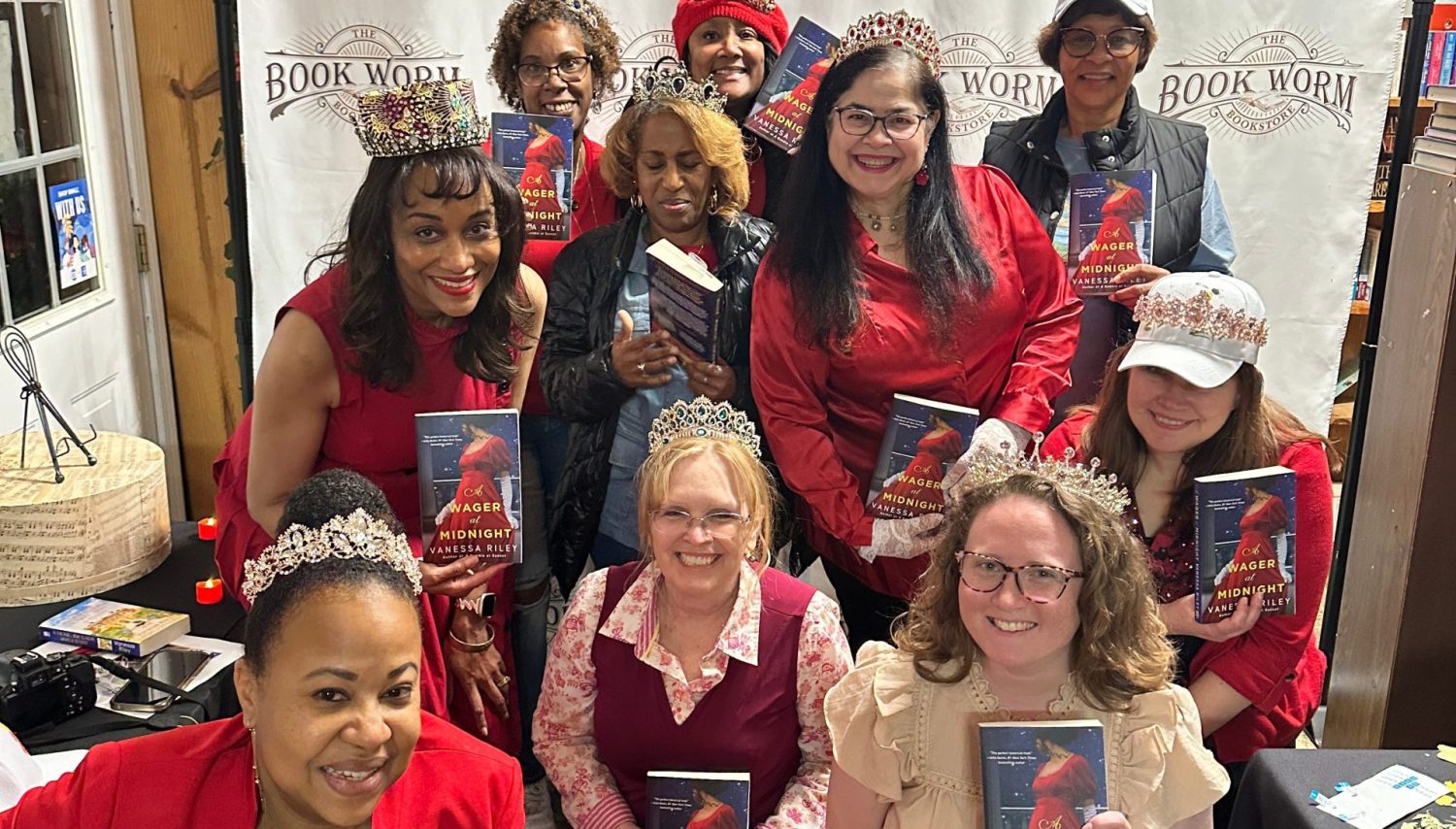
One of the reasons I loved writing Scarlet Wilcox in my upcoming novel A Wager at Midnight is because she has divorced that part of her brain that seeks judgment. She doesn’t care what others think unless it affects her family. Yet, as brave, bold, and daring as she is in seeking her path to bring medicine to those who cannot get it—those whom society deems ineligible or unworthy—she still slips into wanting validation from a physician, Stephen Carew. Scarlet is a good balance of all of us, and I loved writing those moments where she is free of cares and when she’s forced to face her fears.
So I am giving you permission to take a moment for yourself. If you take nothing else from this podcast, learn this: It’s okay to rest. It’s necessary to rest and not focus on numbers or being superhuman. If you don’t take care of you, your body, mind, and creative being, the world will chew you up body, dry up your spirit, and move on to the next overworked soul.
But you? You are the hero of your own story. And every hero needs rest. So take off your cape, stretch it into a hammock, and allow yourself a moment of peace.
Show notes include a list of the books mentioned in this broadcast. This week, I’m highlighting Eagle Eye Bookshop through Bookshop.org.
Subscribe for free. Get Vanessa’s take on current events, publishing—challenges and opportunities—drawing from her journey as an indie author turned traditionally published powerhouse: 26 novels and counting.
Thank you for listening.
This is a public episode. If you’d like to discuss this with other subscribers or get access to bonus episodes, visit vanessariley.substack.com/subscribe
 and written by Regency Reflection’s own Ruth Axtell.


